National law firm Clarke Willmott LLP has made three senior appointments as it looks to build on its most successful year ever.
In September Clarke Willmott reported revenues of £59.6 million for 2021/22—up 12% on the prior year—and recently announced the election of Peter Swinburn as its new CEO from 1 May 2023 in succession to Stephen Rosser, who will step down after 13 years.
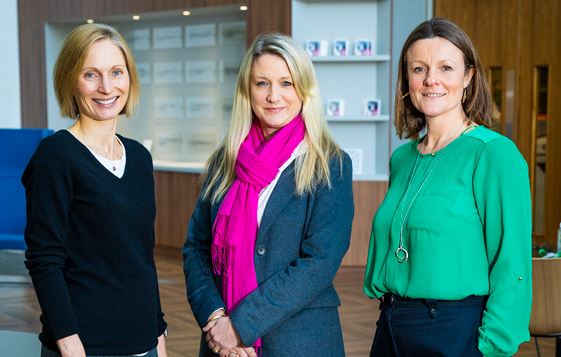
The firm has appointed Karen Higgins (pictured, right) as Head of ESG (Environment, Social and Governance), reflecting its long-term strategic importance to the firm. Karen spent 18 years at Grant Thornton UK LLP and for the past 12 of these was its Head of Sustainability. She is also a board member of Green Element, an environmental consultancy.
Rachel Ramsay (left) is Clarke Willmott’s new internal communications manager. With over 25 years in publishing, journalism and internal communications, she is an expert in building employee experience and culture using innovative channels and is a member of the Institute of Internal Communications’ Professional Development Advisory Board.
Meanwhile Sarah Brickell (centre) has joined Clarke Willmott as Head of Communications. With over 20 years’ experience in marketing, predominantly in financial services, Sarah has a board remit on all external communications at the firm.
Stephen Rosser, CEO at Clarke Willmott, said: 'As a firm we are enjoying strong and improving financial performance, as well as being acknowledged for our strong client and people-focused culture, leadership and commitment to a positive work-life balance for staff.
'ESG is of critical strategic importance in all of this and Karen’s appointment will support us in shaping an ESG strategy which is core to our business. Her role will include the development of plans to reach net zero together with looking at how we can maximise our social value within the communities we serve.
'As Clarke Willmott continues to grow it is paramount that our people are communicating with each other effectively, so Rachel’s internal role is crucial, particularly with hybrid working having become such a central part of our culture.
'Sarah’s appointment means we will have a more effective mechanism for sharing and highlighting the knowledge and expertise that we can provide for clients, their families and their businesses.'
Clarke Willmott LLP is a national law firm with offices in Birmingham, Bristol, Cardiff, London, Manchester, Southampton, and Taunton.