Four new hires have joined the Manchester office of Forbes Solicitors, as the firm expands its commercial litigation, property litigation and contentious probate services in the city.
The new joiners are partner Paul Magee, associate Nicola Laurie, trainee solicitor Alexandra Adesina and paralegal Harry Silverman.
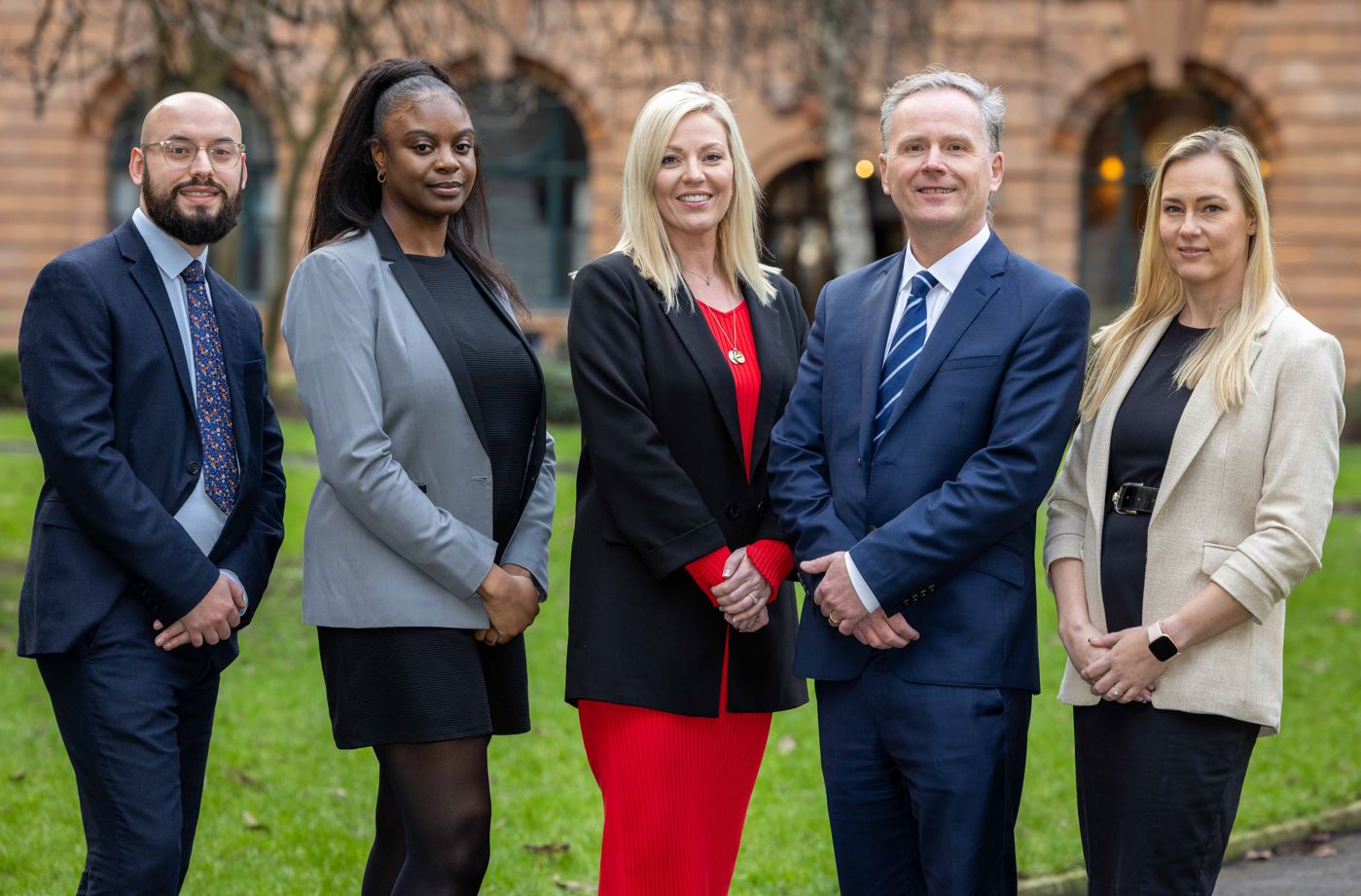
Each join from Linder Myers Solicitors, with Paul (pictured, second right) specialising in commercial and property litigation. He brings over 30 years of experience to Forbes’ Commercial and Property Litigation team and is able to advise on a range of contentious issues covering property (commercial and residential), partnerships and shareholdings, contracts, and leases. He has also acted in many complex and high value cases including defective builds, lottery wins and insurance disputes. Paul’s clients range from famous musicians, footballers and TV personalities to large corporate entities and SMEs.
Trainee Alexandra Adesina (second left) and paralegal Harry Silverman (left) will support the team in Manchester, which works closely with Forbes’ other specialisms including the employment law team and assists growing businesses across the city and nationally.
Nicola Laurie (right) has joined the contentious trusts and probate team in Manchester and is a qualified member of the Association of Contentious Probate Specialists. She has extensive experience acting for beneficiaries, executors, claimants, defendants, trustees and third parties involved in challenging the validity of a Will.
The new starters follow a trio of hires earlier in 2022, when partner Laura McHugh and senior associates Jo Handler and Richard Kay joined the employment law team in Forbes’ Manchester office.
Managing partner of Forbes Solicitors, Pauline Rigby (centre), said: 'Our Manchester office has gone from strength-to-strength, despite the economic challenges of the past few years. We’ve worked hard to grow our insurance and employment law teams in the city, and the four new hires continues this trend in our other teams and is a statement of intent for our ambitions in Manchester and the North West.
'Unfortunately, it looks like a number of market factors will squeeze businesses and individuals in 2023. This will bring increased challenges and scrutiny for financial arrangements, both from a commercial and personal point of view, and expanding our capabilities in these areas will provide people across Manchester with greater access to expertise that helps protect their interests.'