header-logo header-logo

01 July 2019
Categories: Movers & Shakers , Profession
printer mail-detail

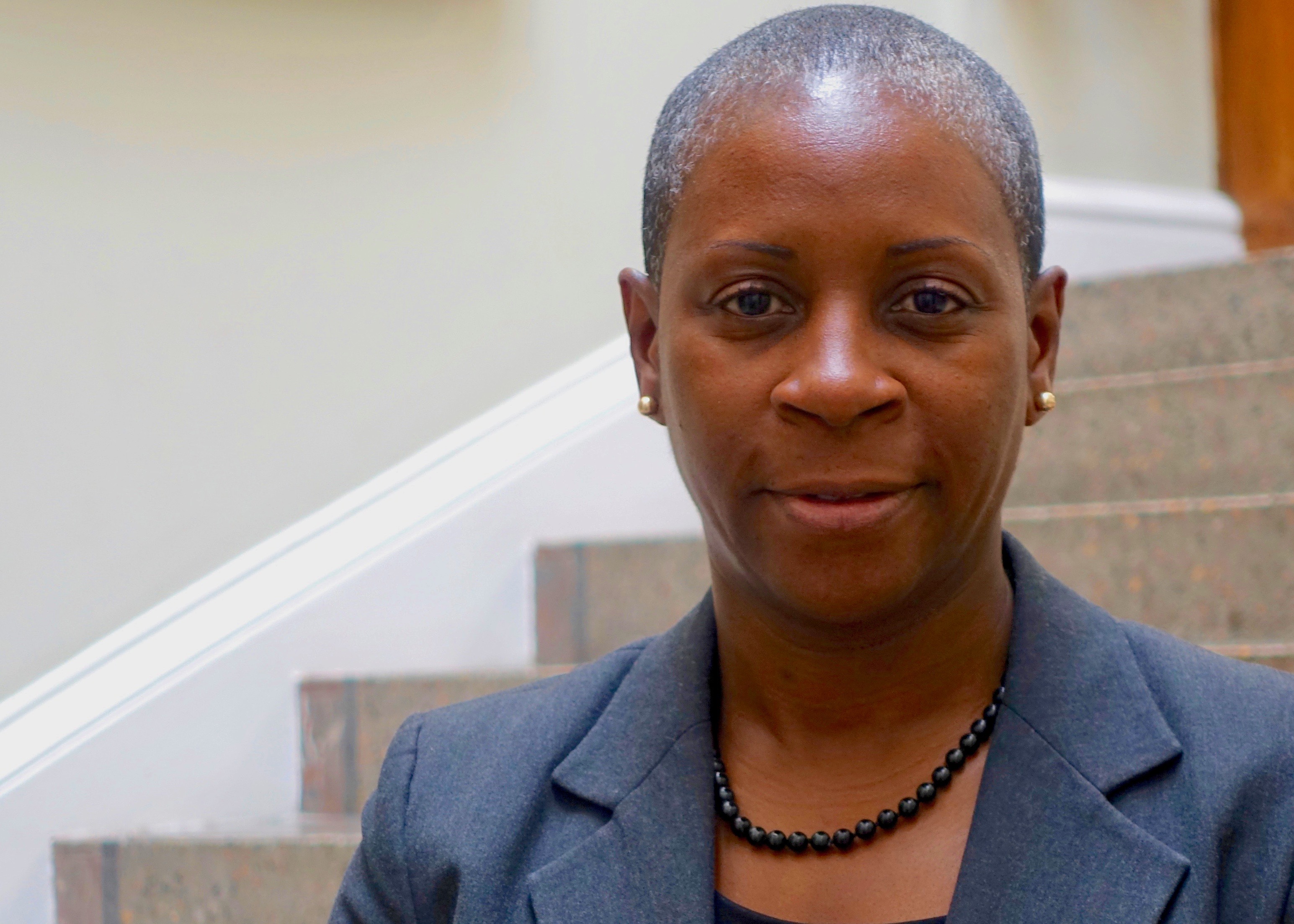
NLJ PROFILE: I.Stephanie Boyce, The Law Society

I.Stephanie Boyce, recently elected deputy vice-president of the Law Society of England & Wales, on representing more than one first 

What was your route into the profession? 

My journey into the profession was far from seamless. 

In 1985, my family relocated to the United States of America. Even though I lived there for the next six years, I always knew I would return to the UK to study law. So, in 1991, the day after finishing high school, I returned to the UK—and so began my legal career. 
 
I stumbled on my first barrier upon discovering my US qualifications would not be recognised in the UK. However, thanks to the access to qualification route, I was able to enter London Guildhall University in 1996, where I graduated with an LLB (Hons) in politics. After that, I progressed to the LPC at the College of Law in Guildford. 
 

Disaster however—almost—struck: I was unable to secure a training contract. However, thanks to the steadfast encouragement of my father, Melvin, I secured a placement with local Aylesbury firm, Horwood & James. I qualified in 2002 and joined my first in-house team a year later. In 2010 I completed a master’s degree in public law and global governance at King’s College, University of London. 

What has been your biggest career challenge so far?

It has probably been to establish myself in the legal profession as a credible candidate to be an elected office holder of the Law Society of England & Wales.

In doing so, I represent a couple of firsts. I will be the first black woman to hold the position of president, and the first in-house solicitor to be an elected office holder.

I hope to bring a fresh perspective—an understanding of the experiences of these under-represented groups, and what we must to do to support them.  

In doing so, I am proof that no matter what the challenge, or how insurmountable the odds appear to be, it is possible to succeed if you are determined and passionate. 

Which person within the legal profession inspires you most?

Through my voluntary work, I have been lucky enough to work with some of the best legal minds the country has to offer. This has enabled me to learn and develop in ways I couldn’t have possibly imagined. 

The amount of time we dedicate to the public, whether it’s through pro bono work or other voluntary activity, is truly a testament to the dedication of so many within our profession. 

Each person who I’ve had the privilege to work with, or whose work I’ve encountered, has inspired me in one way or another. The truth is all my colleagues, past and present, continue to inspire me each and every day. 

If you weren’t a lawyer, what would you choose as an alternate career? 

Athletics. At middle school I was the district champion in 800 metres and ran the third leg in the relay team. Our then coach/teacher, Mr Vyner, always spoke of his hope that one of us would represent England one day. I’m not sure any of us did—at least, not in athletics!

Who is your favourite fictional lawyer? 

Atticus Finch in To Kill a Mockingbird—for all his impressive calmness and dignity in the face of such adversity, and of course, for the following quote: ‘You never really understand a person until you consider things from his point of view, until you climb into his skin and walk around in it.’
 

What change would you make to the legal services industry? 

I would reverse the destructive legal aid cuts that have caused such enormous harm to our justice system—preventing many of the most vulnerable individuals from having access to justice. 

The Legal Aid, Sentencing and Punishment of Offenders Act 2012 has been devastating. We must have a safety net for those who cannot afford legal representation, so that everyone has access to justice. We must continue to press government to release the funds so desperately needed, continually raising awareness of the crisis within our system. 

How do you relax?

I practice mindfulness to relax both body and mind. I also love to listen to classical music, to cycle, and even indulge in a bit of intrigue with Agatha Christie!

Stephanie Boyce will take office as deputy vice-president of the Law Society of England & Wales in July

MOVERS & SHAKERS

Laytons ETL—Maximilian Kraitt

Laytons ETL—Maximilian Kraitt

Commercial firm strengthens real estate disputes team with associate hire

Switalskis—three appointments

Switalskis—three appointments

Firm appoints three directors to board

Browne Jacobson—seven promotions

Browne Jacobson—seven promotions

Six promoted to partner and one to legal director across UK and Ireland offices

NEWS

From blockbuster judgments to procedural shake-ups, the courts are busy reshaping litigation practice. Writing in NLJ this week, Professor Dominic Regan of City Law School hails the Court of Appeal's 'exquisite judgment’ in Mazur restoring the role of supervised non-qualified staff, and highlights a ‘mammoth’ damages ruling likened to War and Peace, alongside guidance on medical reporting fees, where a pragmatic 25% uplift was imposed

Momentum is building behind proposals to restrict children’s access to social media—but the legal and practical challenges are formidable. In NLJ this week, Nick Smallwood of Mills & Reeve examines global moves, including Australia’s under-16 ban and the UK's consultation
Reforms designed to rebalance landlord-tenant relations may instead penalise leaseholders themselves. In this week's NLJ, Mike Somekh of The Freehold Collective warns that the Leasehold and Freehold Reform Act 2024 risks creating an ‘underclass’ of resident-controlled freehold companies
Timing is everything—and the Court of Appeal has delivered clarity on when proceedings are ‘brought’. In his latest 'Civil way' column for NLJ, Stephen Gold explains that a claim is issued for limitation purposes when the claim form is delivered to the court, even if fees are underpaid
The traditional ‘single, intensive day’ of financial dispute resolution (FDR) may be due for a rethink. Writing in NLJ this week, Rachel Frost-Smith and Lauren Guiler of Birketts propose a ‘split FDR’ model, separating judicial evaluation from negotiation
back-to-top-scroll