header-logo header-logo

22 May 2026
Issue: 8162 / Categories: Legal News , Public , Technology , Privacy , Human rights
printer mail-detail

NLJ this week: High Court backs Met Police use of facial recognition

250391
© Guy Bell/Shutterstock
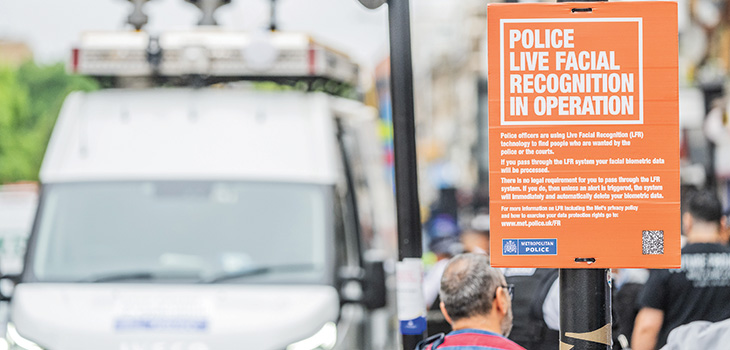
The High Court has upheld the Metropolitan Police’s live facial recognition policy, rejecting claims that its deployment unlawfully interferes with privacy and protest rights

Writing in NLJ this week, Nicholas Dobson says judges concluded the policy was both ‘in accordance with the law’ and sufficiently foreseeable under the European Convention on Human Rights.

The challenge arose after a Black community volunteer was wrongly identified by facial recognition software while his brother was under investigation. Campaigners argued the system gave police overly broad discretion and risked discriminatory deployment in ethnic minority areas. However, the court held that operational decisions were guided by specialist policing judgment rather than the ‘whim or caprice’ of officers.

Dobson notes the judges accepted live facial recognition was not physically ‘intrusive’ in the same sense as fingerprints or DNA collection. The ruling is likely to strengthen police confidence in expanding the technology across London hotspots and public events.

Issue: 8162 / Categories: Legal News , Public , Technology , Privacy , Human rights
printer mail-details

MOVERS & SHAKERS

DSW Legal—James Mallender

DSW Legal—James Mallender

Business advisory group launches dedicated legal division with senior appointment

Gilson Gray—Peter Millican

Gilson Gray—Peter Millican

London corporate practice with partner appointment

Ward Hadaway—Alex Cooper

Ward Hadaway—Alex Cooper

Corporate team welcomes partner in Leeds

NEWS
As AI chatbots increasingly provide legal and commercial advice, English law is beginning to confront who should bear responsibility when automated systems get things wrong
Businesses are facing a ‘dramatic rise in prosecution risks’ as sweeping reforms to corporate criminal liability come into force, expanding the net of who can be held responsible for wrongdoing inside organisations
The Court of Appeal’s decision in Mazur v Charles Russell Speechlys has reignited debate over what exactly counts as the ‘conduct of litigation’ in modern legal practice
A controversial High Court financial remedies ruling has reignited debate over secrecy, non-disclosure and fairness in divorce proceedings involving hidden wealth
Britain’s deferred prosecution agreement regime is undergoing a significant shift, with prosecutors placing renewed emphasis on corporate cooperation, reform and early self-reporting
back-to-top-scroll