header-logo header-logo

05 December 2025
Issue: 8142 / Categories: Legal News , Public , Human rights , Judicial review
printer mail-detail

NLJ this week: Human rights disputes push courts to redefine their role

237723
The public law team at Herbert Smith Freehills Kramer surveys significant recent human rights and judicial review rulings in this week's NLJ

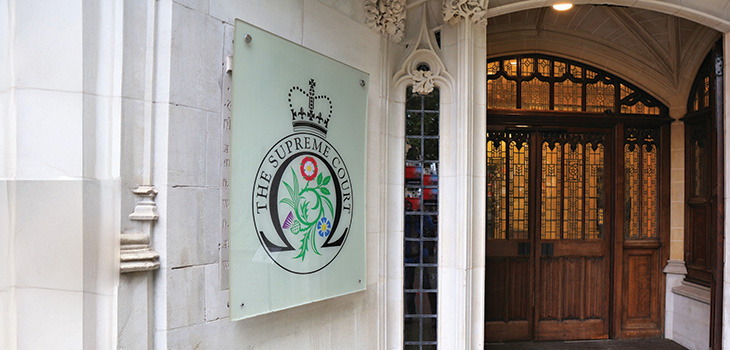
The Supreme Court in Shvidler reaffirmed that courts must conduct their own proportionality assessments, though they must give weight to executive judgments; Lord Leggatt’s dissent warned against judicial deference that ‘abdicates responsibility’.

Challenges to the Online Safety Act highlighted potential conflicts between Category 1 duties and freedom of expression, with the court signalling that future ECHR challenges remain possible.

Under the National Security and Investment Act, a divestment order survived scrutiny despite acknowledged severity, illustrating courts’ reluctance to second-guess national security decisions.

Meanwhile, the boundary between contract and public law remained contested in cases involving Building Safety Act schemes.

Finally, strict time-limit rulings underscore that promptness—often faster than three months—is essential in judicial review.

MOVERS & SHAKERS

NLJ Career Profile: Greg Cox, Simpson Millar

NLJ Career Profile: Greg Cox, Simpson Millar

Simpson Millar CEO Greg Cox talks landmark cases, legal reform and why the profession is crying out for more simplicity

Winckworth Sherwood—Lee Ranford

Winckworth Sherwood—Lee Ranford

Partner joins team as head of restructuring

Burgess Mee—Susie Barter

Burgess Mee—Susie Barter

Family law firm strengthens offering with partner hire

NEWS
Behind the profession’s polished exterior, lawyers are ‘internally drained rather than physically tired’, according to a stark assessment of burnout in legal practice
Five years after the Domestic Abuse Act 2021 came into force, concerns remain that the family courts continue to minimise allegations of abuse in child contact disputes
Uber has built a formidable strategy for insulating itself from liability for drivers’ conduct, but the legal terrain differs sharply between the US and England and Wales
The House of Lords (Hereditary Peers) Act 2026 marks a constitutional watershed by severing the centuries-old link between hereditary titles and automatic membership of the upper chamber
The Civil Justice Council’s review of Part III of the Solicitors Act 1974 could mark the end of what one commentator calls an ‘outdated’ and overly technical regime governing solicitor-client fee disputes
back-to-top-scroll