header-logo header-logo

NLJ this week: Lawyers, Nazis & the incremental fall of democracy

22 November 2024
Issue: 8095 / Categories: Legal News , Profession , Rule of law
printer mail-detail
197691
Should an immoral regime rise to power, it is tempting to think lawyers and the rule of law would act as a protective wall. But is this true? Sadly, history suggests not, as John Gould, chair of Russell-Cooke, writes in this week’s NLJ.

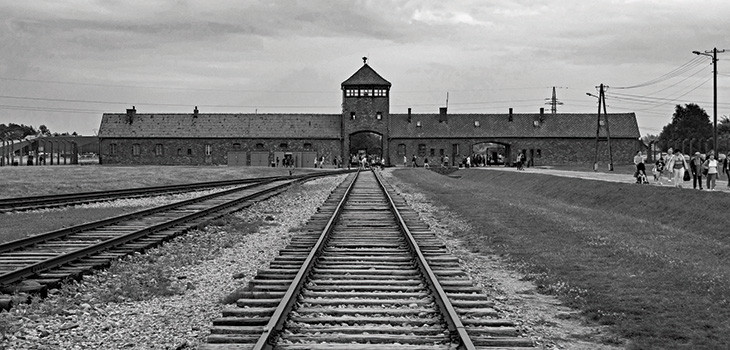
He uses the example of Nazi Germany in the 1930s to illustrate the incremental steps by which a nation with a constitution, independent judiciary and developed legal profession was transformed. Article 48 of Germany’s Weimar Constitution which referred to emergency powers, was a key instrument in this tragic process.

Gould, author of The Law of Legal Services, Second Edition (2019, LexisNexis), writes: ‘Dictatorship is not necessarily the product of violence or revolution; sometimes it grows out of democratic constitutions in states which espouse the rule of law and have embedded within them independent lawyers and judges. Although the decline into autocracy may be incremental, that does not mean it is inevitably slow. A handful of years can be enough for even the most civilised of societies to be subverted.’ 
Issue: 8095 / Categories: Legal News , Profession , Rule of law
printer mail-details
RELATED ARTICLES

MOVERS & SHAKERS

Boies Schiller Flexner—Tim Smyth

Boies Schiller Flexner—Tim Smyth

Firm promotes London international arbitration specialist to partnership

Katten Muchin Rosenman—James Davison & Victoria Procter

Katten Muchin Rosenman—James Davison & Victoria Procter

Firm bolsters restructuring practice with senior London hires

HFW—Guy Marrison

HFW—Guy Marrison

Global aviation disputes practice boosted by London partner hire

NEWS
Writing in NLJ this week, NLJ columnist Dominic Regan surveys a landscape marked by leapfrog appeals, costs skirmishes and notable retirements. With an appeal in Mazur due to be heard next month, Regan notes that uncertainties remain over who will intervene, and hopes for the involvement of the Lady Chief Justice and the Master of the Rolls in deciding the all-important outcome
After the Southport murders and the misinformation that followed, contempt of court law has come under intense scrutiny. In this week's NLJ, Lawrence McNamara and Lauren Schaefer of the Law Commission unpack proposals aimed at restoring clarity without sacrificing fair trial rights
The latest Home Office figures confirm that stop and search remains both controversial and diminished. Writing in NLJ this week, Neil Parpworth of De Montfort University analyses data showing historically low use of s 1 PACE powers, with drugs searches dominating what remains
Boris Johnson’s 2019 attempt to shut down Parliament remains a constitutional cautionary tale. The move, framed as a routine exercise of the royal prerogative, was in truth an extraordinary effort to sideline Parliament at the height of the Brexit crisis. Writing in NLJ this week, Professor Graham Zellick KC dissects how prorogation was wrongly assumed to be beyond judicial scrutiny, only for the Supreme Court to intervene unanimously
A construction defect claim in the Court of Appeal offers a sharp lesson in pleading discipline. In his latest 'Civil way' column for NLJ, Stephen Gold explains how a catastrophically drafted schedule of loss derailed otherwise viable claims. Across the areas explored in this week's column, the message is consistent: clarity, economy and proper pleading matter more than ever
back-to-top-scroll