header-logo header-logo

NLJ this week: Protest and be damned? Dilemmas for healthcare professionals & their regulators

222351
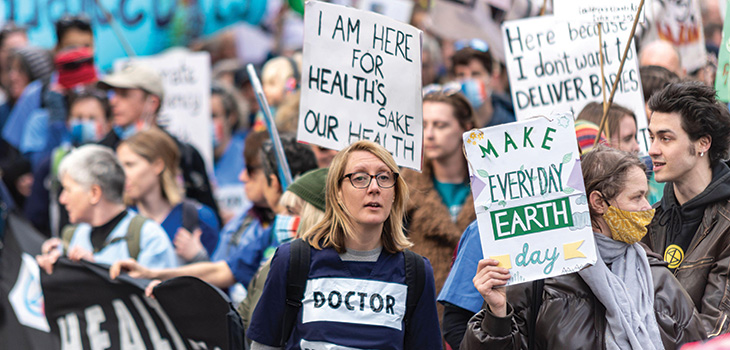
Doctors with placards—what is the law? In this week’s NLJ, barrister Amy Woolfson, of 5 St Andrew’s Hill, analyses the legal position where healthcare professionals take part in climate activism

Woolfson writes: ‘The record-breaking heat in summer 2022 led to cancelled operations, staff and bed shortages, and hospital overheating. It is understandable that many medical professionals, who were trained to promote and protect health, feel compelled to speak up.’

Extinction Rebellion has a specific group for healthcare professionals, Health for XR, and provides support for those who face regulatory or criminal action. However, the array of legal tools used to curb protest has expanded. This means healthcare regulators are being faced with professionals who have committed contempt of court or been convicted of protest offences. At what point does their fitness to practise become impaired? 

MOVERS & SHAKERS

Thomson Hayton Winkley—Jordan Wallace

Thomson Hayton Winkley—Jordan Wallace

Thomson Hayton Winkley strengthens family law team

Ward Hadaway—Barnaby Rosenthall

Ward Hadaway—Barnaby Rosenthall

Construction lawyer returns to Ward Hadaway in Teesside role

Bird & Bird—Shahin Baghaei

Bird & Bird—Shahin Baghaei

Bird Bird hires leading legal transformation expert

NEWS
Legal aid deserts leave almost one in four without adequate access to justice
The Solicitors Regulation Authority (SRA) has warned solicitors and law firms that using artificial intelligence does not alter their professional obligations, amid concerns over inaccurate legal material and client confidentiality
From forgotten interest claims to case-management appeals, a string of procedural developments offers useful—and occasionally cautionary—lessons for practitioners

Jonathan Fisher KC highlights that it now accounts for around 40% of criminal offences, with roughly 70% involving technology, and argues that the UK cannot simply prosecute its way out of the problem. Detection, investigation and prosecution all require improvement, while different fraud types demand tailored responses.

How forcefully can a litigant criticise a public authority before robust advocacy crosses the line into unreasonable conduct? 
back-to-top-scroll