header-logo header-logo

10 June 2020 / Dr Jon Robins
Issue: 7890 / Categories: Features , Criminal , Covid-19
printer mail-detail

The jury’s out?

22394
Jon Robins examines the potentially damaging impact of the COVID-19 crisis on jury trials

Is nothing safe beyond the insidious reach of the COVID-19 pandemic? Last month we learned our right to trial by jury (‘The lamp that shows that freedom lives’, to use the well-worn Lord Devlin quote) could be trimmed for the first time since the Old Bailey was being pummelled during the Blitz.

Has the coronavirus changed the justice system forever? asked a recent headline in The Observer. The presumption of innocence was ‘an indispensable feature of our society’ and the jury its ‘lifeblood’, wrote Jeremy Dein QC in the letters pages of the same paper. ‘It must not become another victim of this crisis.’

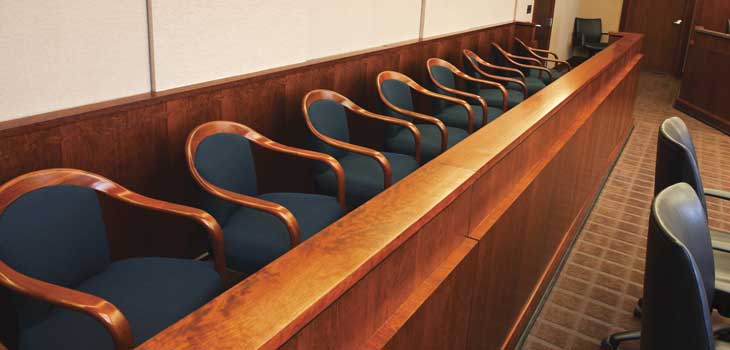
That twelve good men (and women) and true be hemmed in, side-by-side, on their narrow benches for weeks on end before being confined to a wood-panelled jury room for deliberations is neither a practical nor tempting prospect in the age of coronavirus. So Lord Burnett, head of judiciary in

If you are not a subscriber, subscribe now to read this content
If you are already a subscriber sign in
...or Register for two weeks' free access to subscriber content

MOVERS & SHAKERS

Bell Yard Kysen—Liz Giles

Bell Yard Kysen—Liz Giles

Bell Yard Kysen appoints senior legal PR and ex-government communications adviser, Liz Giles

Clarke Willmott—Lee Edwards

Clarke Willmott—Lee Edwards

Clarke Willmott boosts Southampton commercial property team with addition of partner Lee Edwards

Lime Solicitors—four promotions

Lime Solicitors—four promotions

Lime Solicitors announces four promotions

NEWS
The Attorney General, Ellie Reeves KC MP, and Solicitor General, Andy Slaughter KC MP, marked the 25th anniversary of Pro Bono Week by joining lawyers, charities, students and parliamentarians at events celebrating voluntary legal work
A polished legal defence may owe more to artificial intelligence than legal merit—and creditors risk paying the price in delay and expense
Witness evidence can be compromised by AI before a solicitor sees the draft, leaving safeguards focused on authorship incomplete
Should a conviction stand when a later ruling reveals that the law underpinning it was wrong? The answer exposes a clash between finality and justice
The Environment Agency can prosecute offences beyond environmental legislation where proceedings support its statutory functions, the Divisional Court has confirmed
back-to-top-scroll