


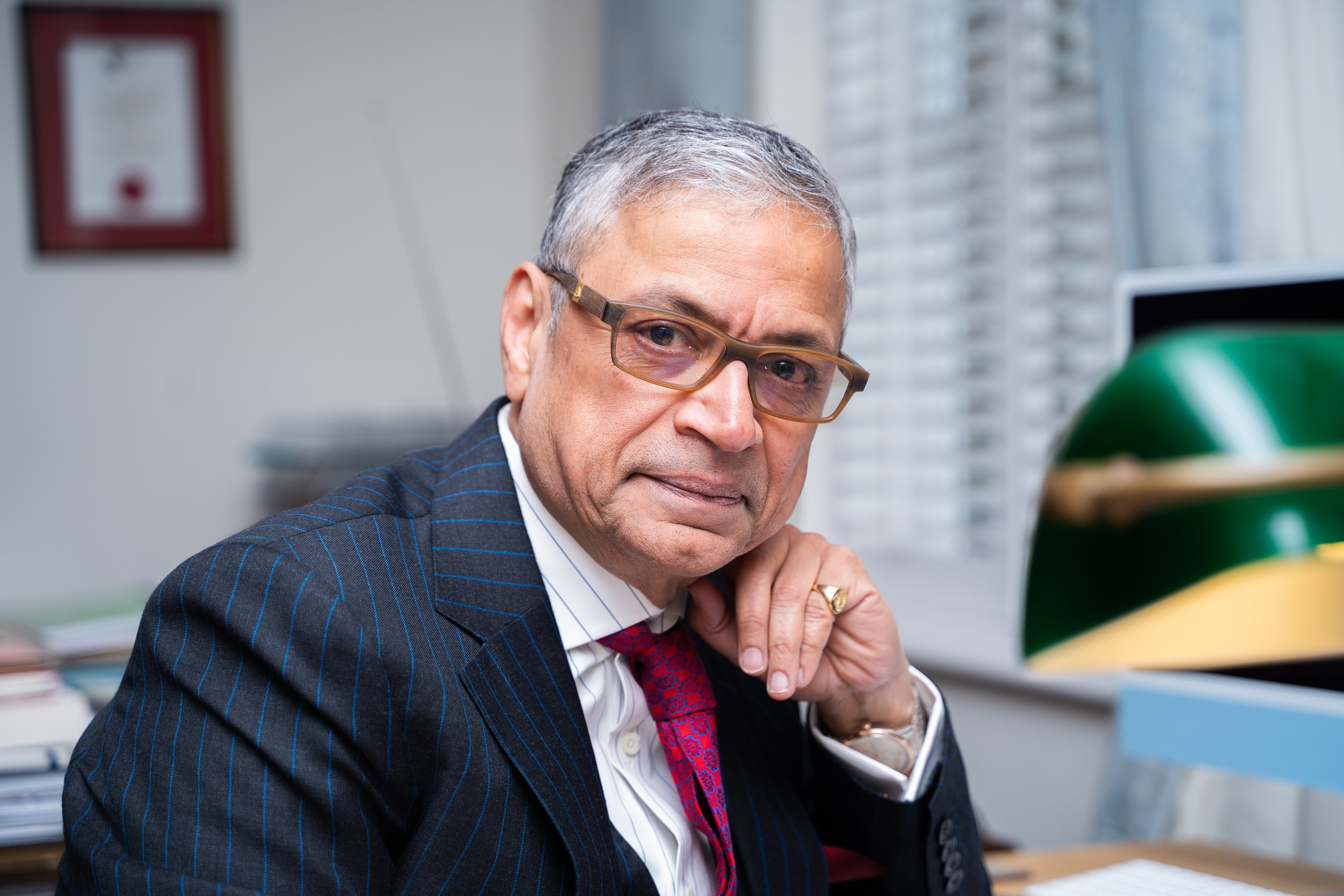
Former solicitor general of India becomes a full tenant at chambers
Gopal Subramanium has become a full tenant at Three Verulam Buildings (3VB). He has been an associate member of the chambers since 2013.
Between 2009 and 2011, Gopal served as solicitor general of India. During that time, he was also chairman of the Bar Council of India, where he focused, among other matters, on strengthening and broadening legal education in the profession, as well as building bridges between India's legal system and other countries, including the UK.
Over recent years, he has intensified his professional, academic, and research work in the UK. In 2019, he was elected a foundation fellow at Somerville College, University of Oxford. This was followed, in 2021, by his induction into the Chancellor's Court of Benefactors at Oxford University by Lord Patten of Barnes.
Alongside his legal activity, he has founded a multi-disciplinary study centre that provides vital research into mental health illnesses. In 2023, he was made an honorary member of the department of psychiatry at the University of Oxford.
In 2015, he was appointed a supplementary judge at the Qatar Financial Centre Regulatory Tribunal. In 2018, he was elected an honorary master of the bench at Gray’s Inn. In February 2020, he became the first Indian senior advocate to appear before the Singapore Court of Appeal. And in 2021, he was called to the bar of England and Wales as a member of Gray’s Inn.
Gopal said: ‘It is an honour to join 3VB as a full member after having enjoyed my time so much as an associate member of the chambers. I look forward to continuing to build my international arbitration practice and, given 3VB’s reputation as a first-class set for such matters, it seemed only a natural progression. I look forward to working closely with my colleagues within such a market-leading and pacesetting chambers.’
David Quest KC, joint head of chambers, said: ‘Gopal is a highly distinguished lawyer with enormous experience as a senior advocate. He has been a much-valued associate member at 3VB for many years, and we are now delighted to welcome him as a full member of chambers in London. He will continue to expand his successful international arbitration practice across a range of disputes.’


