header-logo header-logo

04 August 2023 / Neil Parpworth
Issue: 8036 / Categories: Features , Profession , Criminal , Public
printer mail-detail

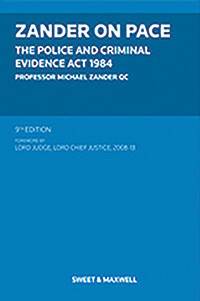
Book review: Zander on PACE: Police and Criminal Evidence Act 1984 (9th Edition)

132780

“Zander on PACE merits considerable praise for being a very accessible volume”

  • Author: Professor Michael Zander KC
  • Publisher: Sweet & Maxwell
  • ISBN: 9780414104785
  • RRP: £85

  • As Lord Judge notes in the foreword, throughout its time on the statute book, the Police and Criminal Evidence Act 1984, or PACE 1984 as it is commonly known, has been ‘constantly revised’. Thankfully, however, Professor Zander has regularly produced new editions of his highly authoritative work on the Act to keep readers up to date with the many changes which have often occurred since the last volume was published. The need to address such fundamental matters as the complexities of the Act, how its provisions have been interpreted by the courts, as well as the significant increase in the number and size of the Codes of Practice made under the authority of PACE 1984, has inevitably had a profound effect on the size of the book over the years.

    The first edition,

    If you are not a subscriber, subscribe now to read this content
    If you are already a subscriber sign in
    ...or Register for two weeks' free access to subscriber content

    MOVERS & SHAKERS

    Bell Yard Kysen—Liz Giles

    Bell Yard Kysen—Liz Giles

    Bell Yard Kysen appoints senior legal PR and ex-government communications adviser, Liz Giles

    Clarke Willmott—Lee Edwards

    Clarke Willmott—Lee Edwards

    Clarke Willmott boosts Southampton commercial property team with addition of partner Lee Edwards

    Lime Solicitors—four promotions

    Lime Solicitors—four promotions

    Lime Solicitors announces four promotions

    NEWS
    An indemnity costs battle with a £20m gap could reopen an important question: what weight should an approved budget carry?
    The Environment Agency can prosecute offences beyond environmental legislation where proceedings support its statutory functions, the Divisional Court has confirmed
    Should a conviction stand when a later ruling reveals that the law underpinning it was wrong? The answer exposes a clash between finality and justice
    Witness evidence can be compromised by AI before a solicitor sees the draft, leaving safeguards focused on authorship incomplete
    Possession claims are entering a new digital era, with procedural traps awaiting practitioners who assume familiar rules still govern every step
    back-to-top-scroll