header-logo header-logo

THIS ISSUE
Card image

Issue: Vol 165, Issue 7660

10 July 2015
IN THIS ISSUE

Dunnage v Randall and another [2015] EWCA Civ 673, [2015] All ER (D) 49 (Jul)

A v The Trustees of the Watchtower Bible and Tract Society and others [2015] EWHC 1722 (QB), [2015] All ER (D) 249 (Jun)

Jon Robins takes issue with the poshness test

Stephen Honey explains how video is taking centre stage in many law firm marketing campaigns

Professional indemnity insurance: Frank Maher casts an expert eye over what to expect

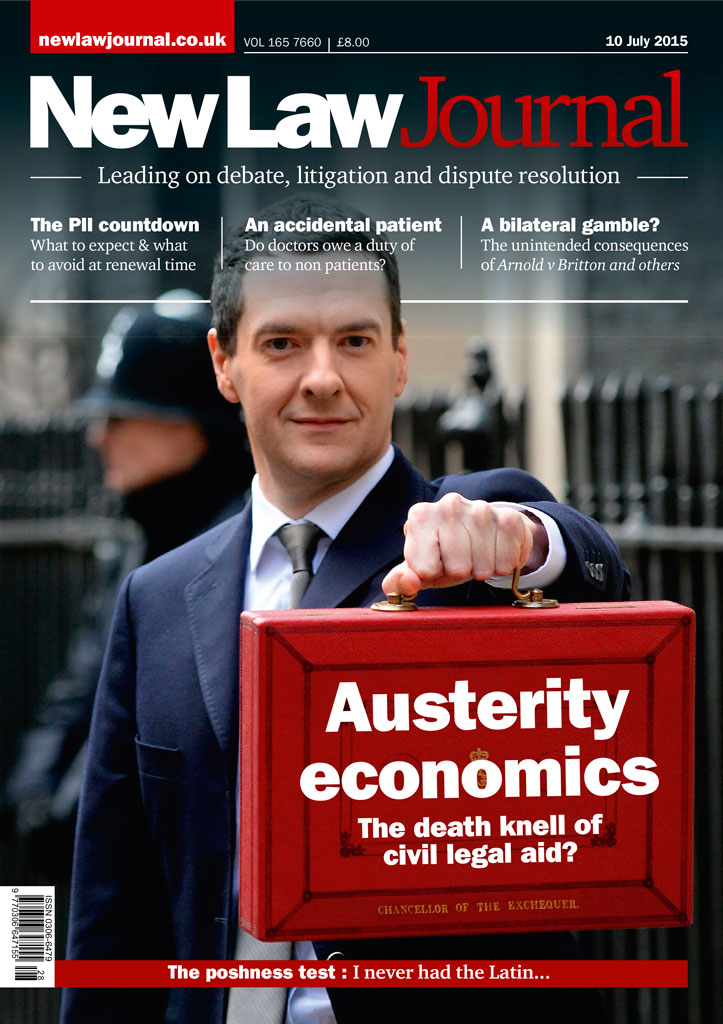
Patrick Allen explains how austerity economics, not the recession, will destroy our civil legal aid system

Osborne’s austerity experiment slated by leading legal aid proponent

Show
10
Results
Results
10
Results

MOVERS & SHAKERS

Haynes Boone—Jeremy Cross

Haynes Boone—Jeremy Cross

Firm strengthens global fund finance practice with London partner hire.

DWF—Stephen Webb

DWF—Stephen Webb

Partner and head of national planning team appointed

mfg Solicitors—Nick Little

mfg Solicitors—Nick Little

Corporate team expands in Birmingham with partner hire

NEWS
Contract damages are usually assessed at the date of breach—but not always. Writing in NLJ this week, Ian Gascoigne, knowledge lawyer at LexisNexis, examines the growing body of cases where courts have allowed later events to reshape compensation
The Supreme Court has restored ‘doctrinal coherence’ to unfair prejudice litigation, writes Natalie Quinlivan, partner at Fieldfisher LLP, in this week' NLJ
The High Court’s refusal to recognise a prolific sperm donor as a child’s legal parent has highlighted the risks of informal conception arrangements, according to Liam Hurren, associate at Kingsley Napley, in NLJ this week
The Court of Appeal’s decision in Mazur may have settled questions around litigation supervision, but the profession should not simply ‘move on’, argues Jennifer Coupland, CEO of CILEX, in this week's NLJ
A simple phrase like ‘subject to references’ may not protect employers as much as they think. Writing in NLJ this week, Ian Smith, barrister and emeritus professor of employment law at UEA, analyses recent employment cases showing how conditional job offers can still create binding contracts
back-to-top-scroll