

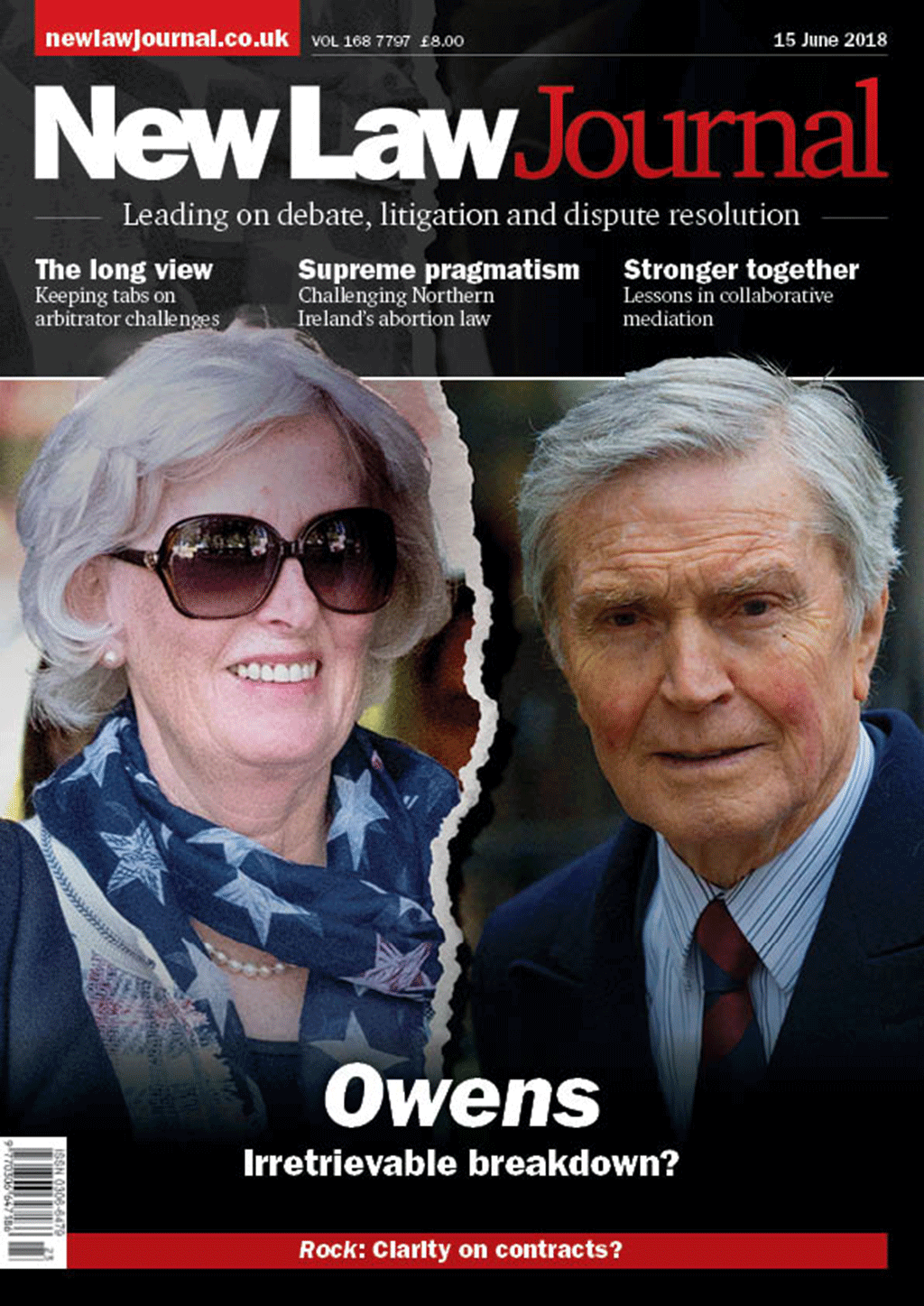


How far will the Supreme Court go as it tackles Owens v Owens, asks Simon Blain
Philip Clifford QC, Hanna Roos & Eleanor Scogings track the nature & trends of two decades of arbitrator challenges
“The Compendium is an immensely useful book that can be recommended both to the beginner and to the seasoned practitioner”
The UAE has welcomed a new Federal Arbitration Law. Leonora Riesenburg provides the details
An exceptional appeal; a purist’s outcome. Lessons from MWB Business Exchange Centres Ltd v Rock Advertising Ltd by Clifford Darton, Sally Anne Blackmore & Samantha Dawkins
Tim Wallis introduces a new kid on the mediation block—the AFM Register of Mediators
Brice Dickson analyses the challenge to Northern Ireland’s abortion law
Close vote to end action reflects ‘frustration, anger & concern’

MOVERS & SHAKERS


Clarke Willmott—Alexia Haines & Kelsey Wells
Clarke Willmott strengthens Birmingham private client team with double appointment

NLJ Career Profile: Hugo Plowman, Mishcon de Reya
From global fraud cases to fishing off-grid, Mishcon de Reya’s chair of dispute resolution Hugo Plowman discusses mentors, management switching off

Maguire Family Law—Jennifer Hudec, Ciara Florey, Alice Ferguson & Ruth Wynn
Maguire Family Law announces partner promotion and new hires amid a record year for enquiries

