

THIS ISSUE


Michael L Nash shares his reflections on a remarkable reign
Is the ‘self-contained code’ of the Part 36 regime showing signs of opening up? Stephen Burns & Emilie Brammer examine some recent developments
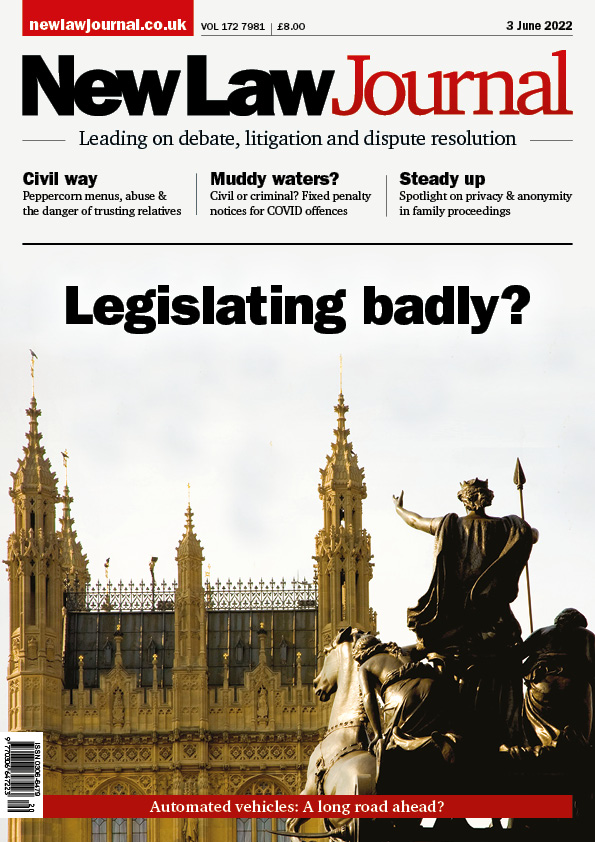
Lucie Clinch provides a guide to the Law Commissions’ report on automated vehicles and next steps for road traffic law
Measures introduced in the Queen’s Speech risk fuelling legislative bad habits. Nick Wrightson sets out why
Avneet Baryan reports on the inviolability of embargoed judgments: what does this mean for practitioners?
Defendants trapped on portal; Peppercorn menu; More abuse; The danger of trusting relatives
Any ten years will do: Richard Oughton hails the return of clarity & common sense to claims for adverse possession
Neil Parpworth reports on fixed penalty notices for COVID offences: have they muddied the waters between civil & criminal penalties?
Time to steady the law on privacy & anonymity in family proceedings? David Burrows makes the case

MOVERS & SHAKERS


Clyde & Co—Suriya Ashok
Clyde Co strengthens energy transition and construction offering with hire of Suriya Ashok

Jurit—Nicole Gallop Mildon
Jurit appoints rare dual-qualified lawyer to expand Anglo-French private wealth expertise

Twenty Essex—Thomas Hibbs, Jack Hollingworth & Sam Pearce
Three new tenants join Twenty Essex
NEWS
The Financial Reporting Council’s revised Audit Enforcement Procedure will alter the balance of power in corporate investigations
A telecoms operator may be able to hold over under the Landlord and Tenant Act 1954, yet still be unable to secure a renewal: an outcome described as a legal ‘paradox’
Safety fears do not automatically justify shutting an interested person out of a statutory will application
Consumer credit law is heading for its biggest shake-up in 50 years, with the Consumer Credit Act 1974 set to yield much of its detailed statutory machinery to FCA rules
The Supreme Court has settled a long-running dispute over part-time workers: unfavourable treatment need be a significant or effective cause, not the sole cause
Copyright © 2026 LexisNexis

