



Holland v Revenue and Customs Commissioners and another [2010] UKSC 51, [2010] All ER (D) 255 (Nov)
Falmouth House Freehold Company Ltd and another v Morgan Walker LLP [2010] All ER (D) 256 (Nov)
Lykiardopulo v Lykiardopulo [2010] EWCA Civ 1315, [2010] All ER (D) 225 (Nov)
Lykiardopulo v Lykiardopulo [2010] EWCA Civ 1315, [2010] All ER (D) 225 (Nov)
SAS institute Inc v World Programming Ltd [2010] EWHC 3012 (Ch), [2010] All ER (D) 243 (Nov)
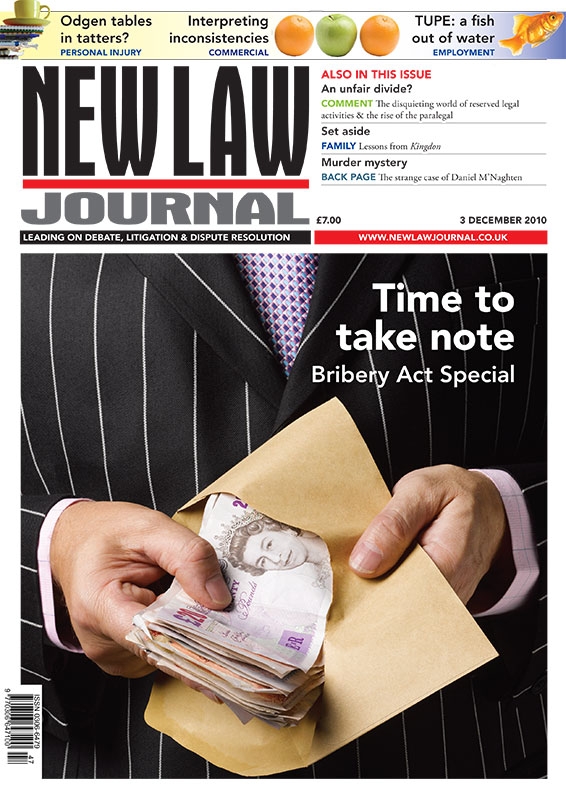
James Wilson reports on the strange case of Daniel M’Naghten
Lewis Silkin LLP has appointed three team members from Swan Turton.
Nottingham Law School has announced the appointment of a new dean.
Matthew Olorenshaw has joined Fishburns solictors London office.
Appleby has appointed Mike Ellis as deputy general counsel to the group


MOVERS & SHAKERS


Penningtons Manches Cooper—Jean-François Le Gal
Penningtons Manches Cooper strengthens international disputes team with appointment of leading arbitration partner

Shakespeare Martineau—Aaron Sanders & Kate Saunders
Shakespeare Martineau strengthens trust and estates disputes team with new appointments

Bellevue Law—Shannon Moore
Bellevue Law strengthens employment disputes and international advisory capability with senior associate appointment

