



Churchill Insurance Company Ltd v Wilkinson; Evans v Equity Claims Ltd [2012] EWCA Civ 1166, [2012] All ER (D) 157 (Aug)
Embracing technology: are you ready for the big bang next year, asks HH Judge Simon Brown QC
Chris Pamplin considers revised guidance for expert witnesses & those who instruct them
James Wilson recounts an early privacy action with a twist at the heart of the case
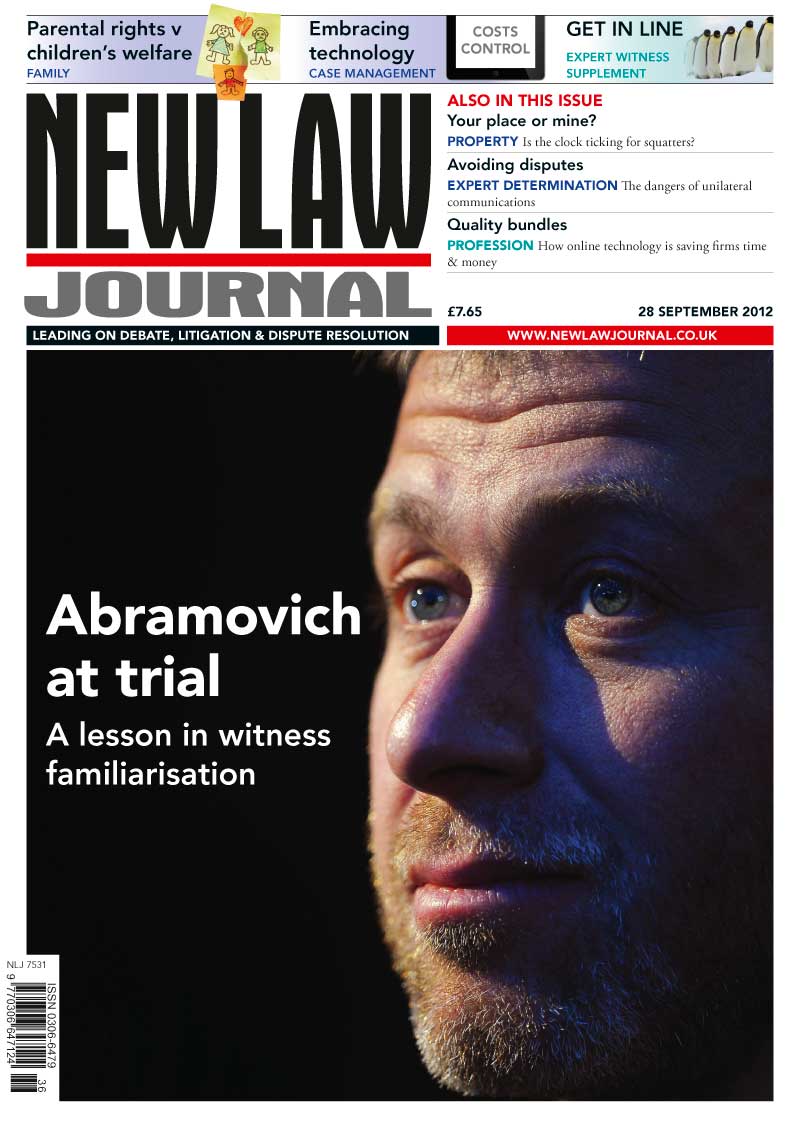
Mark Solon follows a multi-billion pound law suit as it unfolds
Sam Cherry provides an update on chancel repair liability & addresses
a medieval anomaly...
Online technology is saving firms time & money, says Paul Sachs
On 1 October, a new small claims track will be introduced at the Patents County Court to deal with low-value and uncomplicated intellectual property claims.
The role and conduct of solicitors involved in legal proceedings afer the Hillsborough disaster is to be investigated by the Solicitors Regulation Authority (SRA).
Lawyers have welcomed the launch of research into the ethics of medical education events sponsored by the life sciences industry.


MOVERS & SHAKERS


Clyde & Co—Suriya Ashok
Clyde Co strengthens energy transition and construction offering with hire of Suriya Ashok

Jurit—Nicole Gallop Mildon
Jurit appoints rare dual-qualified lawyer to expand Anglo-French private wealth expertise

Twenty Essex—Thomas Hibbs, Jack Hollingworth & Sam Pearce
Three new tenants join Twenty Essex
Safety fears do not automatically justify shutting an interested person out of a statutory will application

