header-logo header-logo

18 March 2016 / Louis Flannery KC
Issue: 7691 / Categories: Features
printer mail-detail

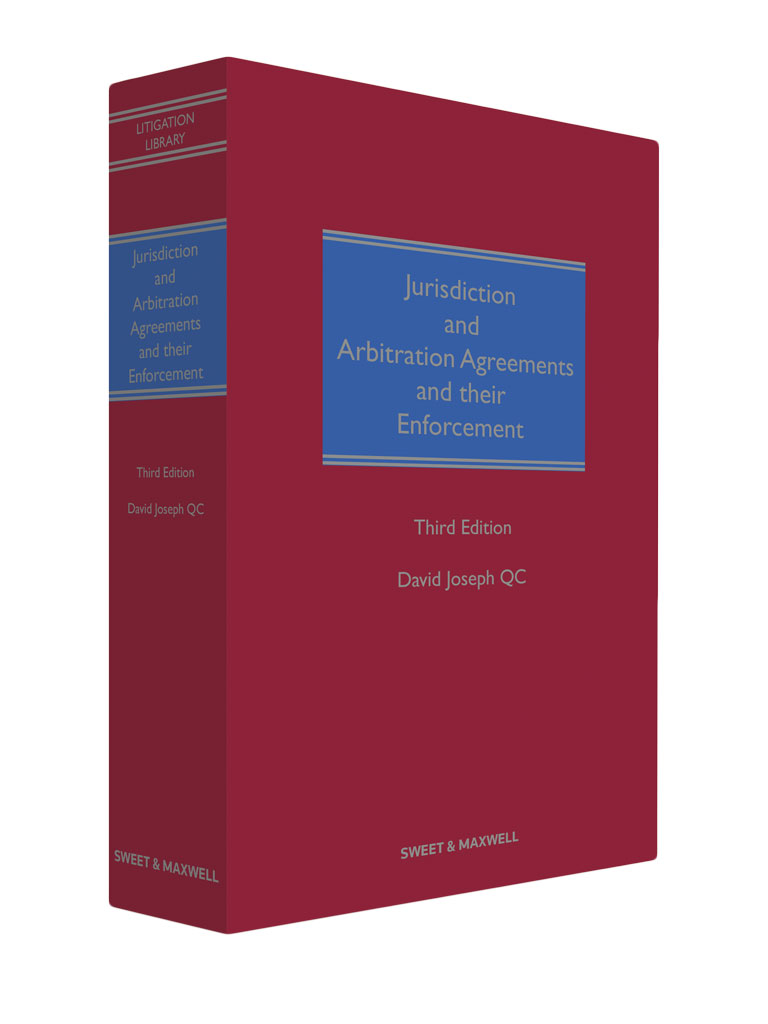
Book review: Jurisdiction and Arbitration Agreements and their Enforcement

001_nlj_7691_book2

"Carry on groping in the dark if you wish; better I think to buy, beg or borrow this text"

Author: David Joseph QC
Publisher: Sweet & Maxwell
ISBN: 9780414034310
Price: £210

The explosive growth in international trade in recent decades shows no signs of slowing—quite the opposite. As the table of cases in David Joseph QC’s brilliant 3rd edition amply demonstrates, the six years since the last iteration have seen an abundant yield of case law, especially from the major common law jurisdictions, all distilled and explained with wonderful clarity in this work. While courts globally have had to grapple with increasingly prolix arbitration and jurisdiction clauses, he has grappled with the grapplers, as well as with the added complexity of the Hague Convention on Choice of Court Agreements and the Brussels Recast Regulation (both introduced in 2015). The halcyon days when a typical forum or arbitration clause might occupy two lines (and their academic treatment no more than a couple of pages) are long gone. It is

If you are not a subscriber, subscribe now to read this content
If you are already a subscriber sign in
...or Register for two weeks' free access to subscriber content

MOVERS & SHAKERS

Clyde & Co—Suriya Ashok

Clyde & Co—Suriya Ashok

Clyde Co strengthens energy transition and construction offering with hire of Suriya Ashok

Jurit—Nicole Gallop Mildon

Jurit—Nicole Gallop Mildon

Jurit appoints rare dual-qualified lawyer to expand Anglo-French private wealth expertise

NEWS
The Financial Reporting Council’s revised Audit Enforcement Procedure will alter the balance of power in corporate investigations
A telecoms operator may be able to hold over under the Landlord and Tenant Act 1954, yet still be unable to secure a renewal: an outcome described as a legal ‘paradox’

Safety fears do not automatically justify shutting an interested person out of a statutory will application

Consumer credit law is heading for its biggest shake-up in 50 years, with the Consumer Credit Act 1974 set to yield much of its detailed statutory machinery to FCA rules
The Supreme Court has settled a long-running dispute over part-time workers: unfavourable treatment need be a significant or effective cause, not the sole cause
back-to-top-scroll