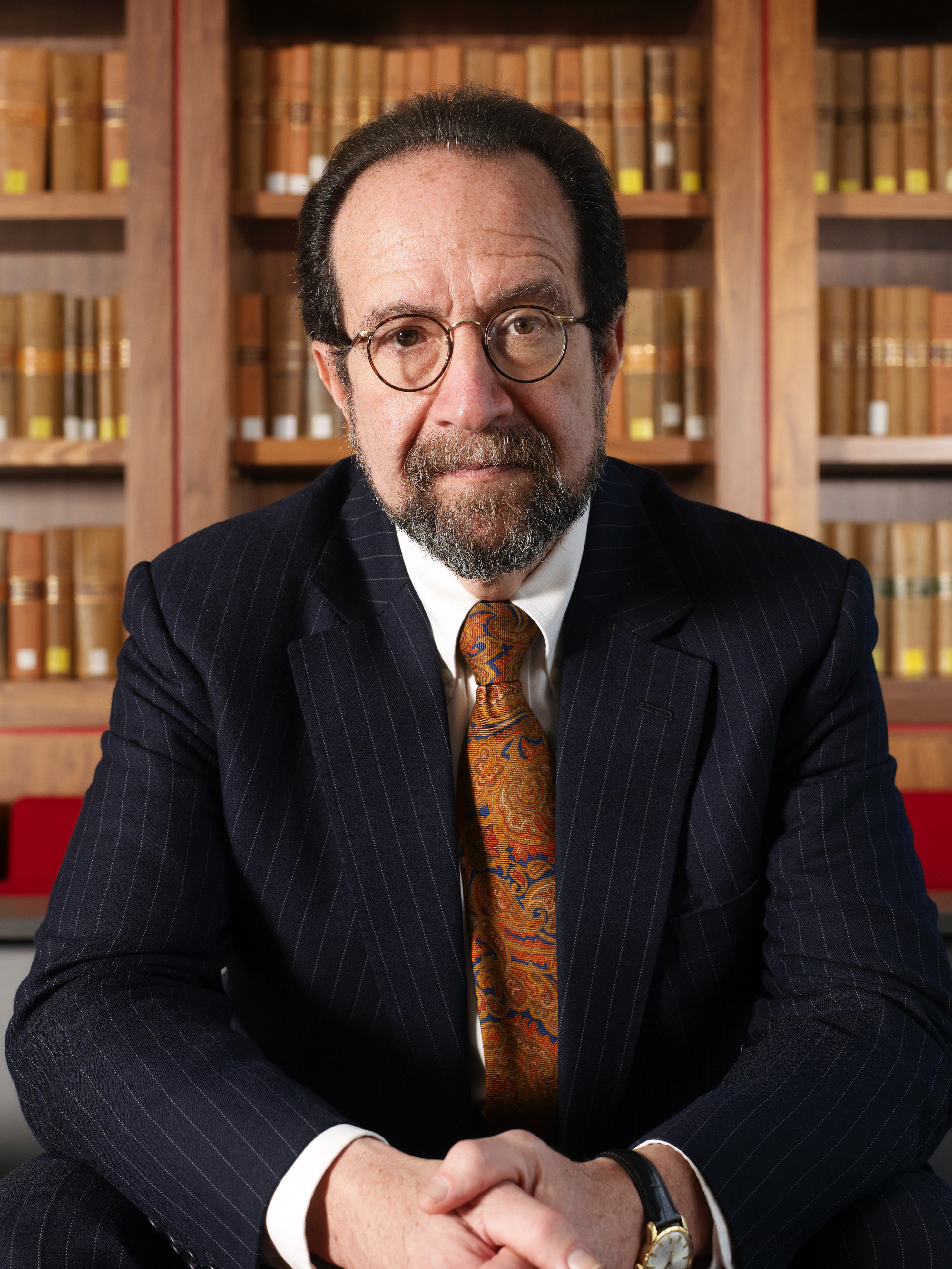
The first non-barrister head of chambers on luck, letter-writing & the Lone Ranger
What was your route into the profession?
It started early. They tell me that I expressed an ambition to be a lawyer from the very first time I voiced a view on any career (ie probably around age four, though I think I also had an interest in joining up with the Lone Ranger and Tonto in their fight for justice around about that same time). Still, it took a while and three universities to ready me for a legal career and make me employable. I then took the well-greased slide from an Ivy League law school to a Wall Street law firm, my first legal job following qualification. That was 40 years ago, and it was a bit of a culture shock. More people worked in my building then than lived in my hometown, and I seem to recall that in my interviews to get there I had to apologise for two things: first, for having a beard and next for my interest in international law. I had published on the subject of public international law as a graduate student, and I remember one senior partner at a leading law firm looking at my CV and asking, 'Are you sure you don’t want to be a professor?' I don’t think he meant it as a compliment.
What has been your biggest career challenge so far?
Almost certainly my biggest career challenge (aside from my current attempt to lead a barrister set despite my American accent!) was joining Allen & Overy as the firm’s first non-English law qualified partner and being tasked with building a US law practice that could compete successfully for international capital markets work with the leading Wall Street practices. When I accepted the offer to join A&O, the then-Senior Partner kindly suggested that I could bring my secretary across with me as well. I replied that I might also need an associate or two. Competing with the established US law practices for the very best US law graduates was indeed a challenge, but in fact the brave and talented young pioneers who made the leap of faith to our start-up in the early years when we were first building the team proved to be a very special group for which I have much admiration and of which very fond memories. When I retired from A&O, we counted the number of US qualified lawyers at the firm in the hundreds, practicing out of several of the firm’s offices round the globe, and at one stage it was reported that we had the largest US law practice in London, even when compared with the London offices of the US-headquartered law firms. There are, of course, now more non-English law qualified A&O partners than English law qualified ones; more partners in the firm’s offices outside the UK than in it. However, the demographics were, and the challenge was, very different when I arrived nearly 25 years ago.
Which person within the legal profession inspires you most?
I am a very, very lucky lawyer, and I have been mentored and inspired by a great many lawyers, too many to list but among them: my late uncle, Daniel Golden, a solo practitioner in my hometown much respected in his jurisdiction, who rose in his career to be elected President of his State Bar and was still practicing at 90; the first partner to whom I was assigned, the late Robert Rosenman, then Managing Partner at Cravath, Swaine & Moore and a legendary US securities lawyer and practice leader, who taught me to think critically and the importance of attention to detail; Dame Rosalyn Higgins, later President of the International Court of Justice but long before that I was in the first class that she taught at the London School of Economics, whom I found inspiring both for her achievements and her person; and latterly Lord Woolf, former Lord Chief Justice, who has provided inspiration and encouragement for our P.R.I.M.E. Finance project consistent with so many other inspiring contributions he has tirelessly made to the profession.
If you weren’t a lawyer, what would you choose as an alternate career?
In the summer of 1971, my wife (and then-girlfriend) Rita and I hitch-hiked across northern Africa, including the Sahara Desert. In the Medina, in an ancient part of the Moroccan city of Fez, we came across a man sitting at a rickety table with a beat-up typewriter. He turned out to be the town 'letter writer', and the locals would come along one by one to request that he write on their behalf—a love letter, a complaining letter, a job application, whatever. It was clear that many could not read, let alone write for themselves, but it was also clear that he was keen to do right by them, and it was also obvious that they had complete trust that he would do just that. I have often thought that, if not the law, that would be the job for me.
Who is your favourite fictional lawyer?
Well, it has to be Atticus Fitch in To Kill a Mockingbird, although the best courtroom appearance award should probably go to Mona Lisa, Vinny Gambini’s girlfriend in My Cousin Vinny. I also cheered a lot for Martha Costello in Silk.
What change would you make to the profession?
The fact is that I think more about changes to the profession that would worry me than changes I would wish to see made to it. For example, I hope never to see the law’s status as a learned profession change. And insofar as the legal profession has succeeded in the past to attract more than its fair share of the best and the brightest, I hope that never changes either. But the one change that I would like to see is for access to justice to somehow become more affordable. The truth is that I can’t afford myself. That cannot be right.
How do you relax?
I’m a Spurs supporter and season ticket holder, though as much as I set off to the matches to enjoy myself, I would not describe the agony and ecstasy of being a Spurs fan over the years as relaxing. It may surprise them to hear or read this, but actually time spent with Rita and our family and the vicarious thrills I have had from their many accomplishments all contribute greatly to my well-being. If the family is happy, I am relaxed and happy. If they are not, I am not. I am a people person, and the company of my friends is also a primary source of relaxation for me.