header-logo header-logo

07 July 2023
Issue: 8032 / Categories: Legal News , Profession , Career focus , Diversity
printer mail-detail

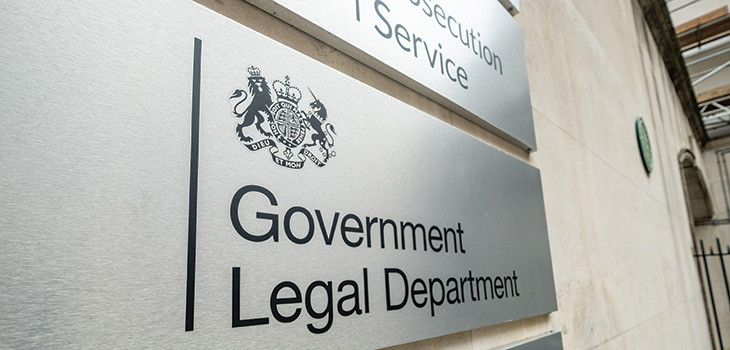
NLJ this week: Government Legal Department tears down socio-economic barriers

129530
Government lawyers should reflect the society they serve, Susanna McGibbon, Treasury Solicitor and Permanent Secretary to the Government Legal Department, writes in this week’s NLJ.

McGibbon, who is the second female Treasury Solicitor, reflects on her own ‘culture shock’ on starting pupillage in London as the first person in her immediate family to go to university. She sets out the Government Legal Department’s action plan to increase access and improve social mobility. In particular, she wants to ensure socio-economic background is not a barrier to starting a legal career.

McGibbon writes: ‘I believe we achieve this by integrating principles of fairness and inclusion into everything we do—from recruitment to training and career development.’ 

Read more on social mobility in government here.

MOVERS & SHAKERS

Boodle Hatfield—Tom McLaughlin

Boodle Hatfield—Tom McLaughlin

Boodle Hatfield welcomes new employment partner, Tom McLaughlin

Arc Pensions Law—Victoria Thompson-Hill, Jonathan Mason & Georgi Ivanov

Arc Pensions Law—Victoria Thompson-Hill, Jonathan Mason & Georgi Ivanov

National specialist pensions law firm strengthens team with three new appointments

Jurit—Christian Abletshauser

Jurit—Christian Abletshauser

Jurit appoints Christian Abletshauser to lead family law practice

NEWS
Burges Salmon appoints Benn Richards to strengthen Contentious Insolvency offering
A High Court decision has clarified that a home may be unfit for human habitation not only where conditions endanger health or safety, but also where they seriously undermine comfort and convenience

A longer time limit for employment tribunal claims, new charity law thresholds, property tribunal recruitment and appellate guidance on small-claims costs feature in the latest Civil Way round-up

A recent High Court ruling could make issue estoppel considerably more complex in cross-border litigation, requiring parties to consider the foreign law governing the underlying claim
The Supreme Court has overturned Cheshire West’s bright-line test for deprivation of liberty, replacing it with a broader, more contextual assessment that gives greater weight to an individual’s wishes, feelings and apparent consent
back-to-top-scroll