header-logo header-logo

06 March 2026 / Fred Philpott
Issue: 8152 / Categories: Opinion , Judicial review , Local government , Public
printer mail-detail

Worse than a U-turn?

243965

One for the history books: Fred Philpott reports on the abandonment of the government’s plans to postpone local elections

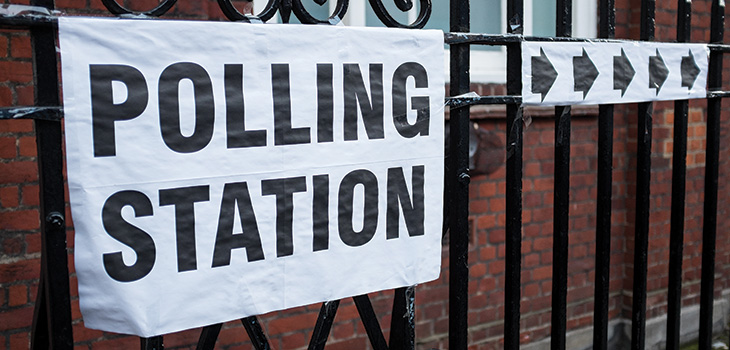
Last month, the government revoked an order postponing local elections in many parts of England for a year. This has been labelled a U-turn. It was not a U-turn: it was capitulation in the face of an almost certain defeat in the High Court.

Background

The government’s manifesto includes a proposal to reform local government. Some areas have unitary authorities (eg Luton) which replaced the system, going back to the end of the century before last, of county councils (generally with responsibility for matters such as highways, education and social services) and, at the next level, district councils dealing with waste collection, rate collection, planning etc.

The current proposal is, in very general terms, to amalgamate all district and county councils into unitary authorities. For example, it is likely that all the district councils in Hertfordshire will cease to exist, as will Hertfordshire County Council, all being replaced by two unitary

If you are not a subscriber, subscribe now to read this content
If you are already a subscriber sign in
...or Register for two weeks' free access to subscriber content

MOVERS & SHAKERS

Freeths—Sophie Fulwell

Freeths—Sophie Fulwell

National firm strengthens Liverpool employment practice with director hire

Cargo Law—Francesca Santoro

Cargo Law—Francesca Santoro

Specialist marine law firm expands disputes practice with senior hire

Ward Hadaway—19 promotions

Ward Hadaway—19 promotions

19 promotions across national offices, including two new partners

NEWS
The Court of Appeal’s decision in Mazur v Charles Russell Speechlys has reignited debate over what exactly counts as the ‘conduct of litigation’ in modern legal practice
A controversial High Court financial remedies ruling has reignited debate over secrecy, non-disclosure and fairness in divorce proceedings involving hidden wealth
Britain’s deferred prosecution agreement regime is undergoing a significant shift, with prosecutors placing renewed emphasis on corporate cooperation, reform and early self-reporting
The High Court has upheld the Metropolitan Police’s live facial recognition policy, rejecting claims that its deployment unlawfully interferes with privacy and protest rights
As AI chatbots increasingly provide legal and commercial advice, English law is beginning to confront who should bear responsibility when automated systems get things wrong
back-to-top-scroll