



Roderick Ramage reworks William Shakespeare in bite-size format
Judicial Q&A: challenge route; goods without cash; too much court; mortgage release doubts; who decides on committal?
Jan-Jaap Baer & Mark Hall review recent developments in the law of privilege
Enforcing possession orders in the High Court: Brooke Lyne reviews the meaning of sufficient notice
Gig economy cases are changing the way courts consider employment status, as Tim Welch reports
The Lachaux ruling has brought some much-needed clarity to the definition of serious harm in defamation cases, says Athelstane Aamodt
Laura Naser provides an update on the fall-out from the international cohabitee jurisdiction race
Nicholas Bevan regrets that an opportunity has been missed & justice has not been done
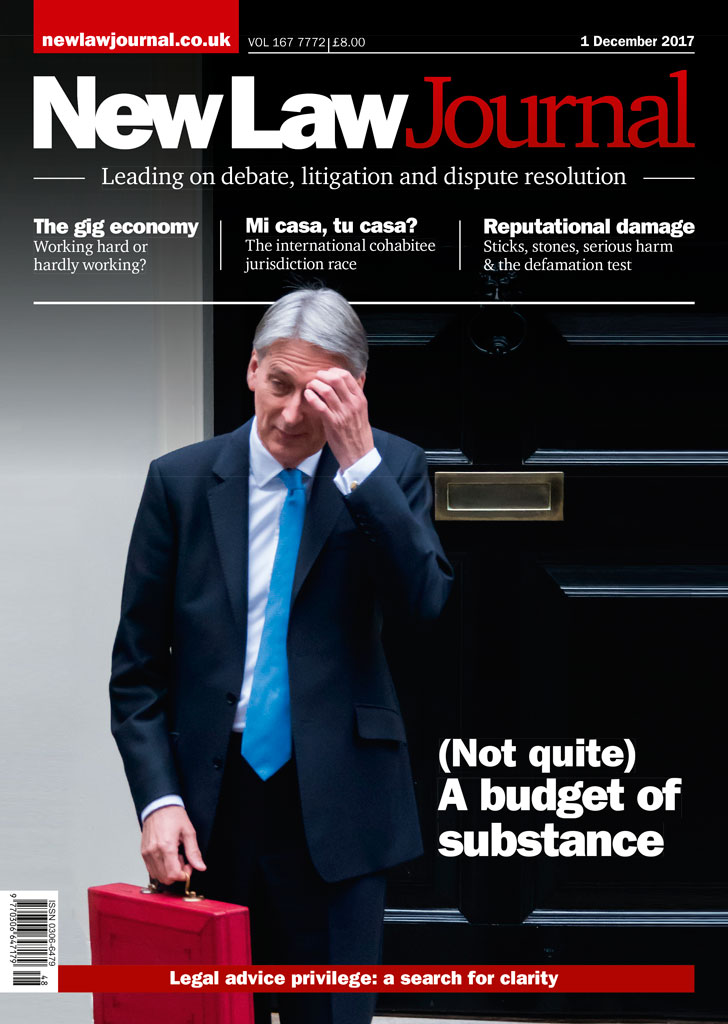
Peter Vaines reflects on some good jokes but little else of substance in the Chancellor’s recent announcements

MOVERS & SHAKERS


HFW—Nelson Wang
HFW strengthens global insurance practice and Greater China offering with London Partner hire

Burges Salmon—David McEwing
Burges Salmon boosts Energy and Utilities practice with appointment of David McEwing

Browne Jacobson—Alexander Studholme
Browne Jacobson adds international construction arbitration partner in London push
Finding matrimonial wealth is as challenging as dividing it, as family disputes draw practitioners into asset tracing, offshore structures and insolvency

