

THIS ISSUE
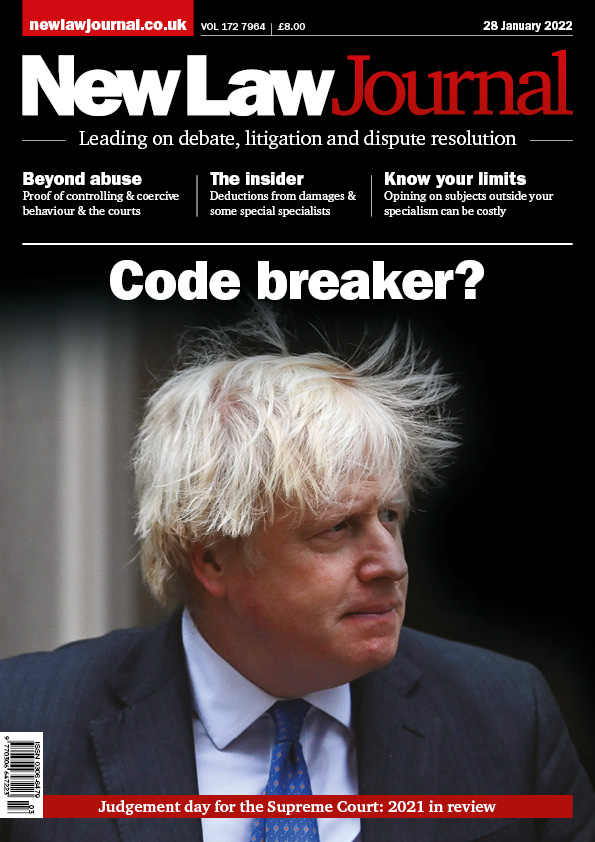


Spotlight on domestic abuse cases: David Burrows examines proof of controlling & coercive behaviour
Dr Chris Pamplin looks at a recent ECtHR judgment that highlights the unfairness in judicial criticism of expert witnesses & offers a possible solution
Misbehaviour in public office: John Gould examines the limitations of the Ministerial Code
"Lord Brown has clear views on the law and the legal institutions"
Experts opining on subjects outside their specialism risk being hit with a third-party costs order, as David Locke & Giles Colin explain
Brice Dickson considers the Supreme Court’s output in 2021…
"The message of Breyer is that the Supreme Court, like democracy, relies on consensus and a recognition from all institutions of faithfulness to that consensus"
Vijay Ganapathy & Walker Syachalinga examine some key issues raised in the latest rulings on personal injury
Dominic Regan delves into deductions from damages & namechecks some particularly special specialists

MOVERS & SHAKERS


Withers—Sophie Barrett-Brown
Withers drives further growth in its UK immigration team with new partner Sophie Barrett-Brown

Venus Legal—Esther Amoako
Venus Legal invests in next generation of legal talent as specialist litigation practice grows

Fisher Phillips—Catrina Smith
Fisher Phillips continues momentum in London with arrival of Catrina Smith
NEWS
Restrictions on workplace non-disclosure agreements could make settlements slower, more complex and more expensive when reforms expected in 2027 take effect
Private prosecutors face closer scrutiny under Crown Prosecution Service guidance designed to strengthen accountability and consistency when intervention is requested
Foreign states cannot necessarily claim immunity for cyber operations launched abroad against computers in Britain, following a divided Supreme Court ruling
Defendants who make unsupported complaints about their lawyers risk losing legal aid while confiscation proceedings continue without representation
Lawyers advising Russian clients face different sanctions restrictions across the UK, EU and US, despite their shared objective of increasing pressure on Russia
Copyright © 2026 LexisNexis

