header-logo header-logo

09 July 2019 / Dominic Regan
Categories: Features , Employment , TUPE
printer mail-detail

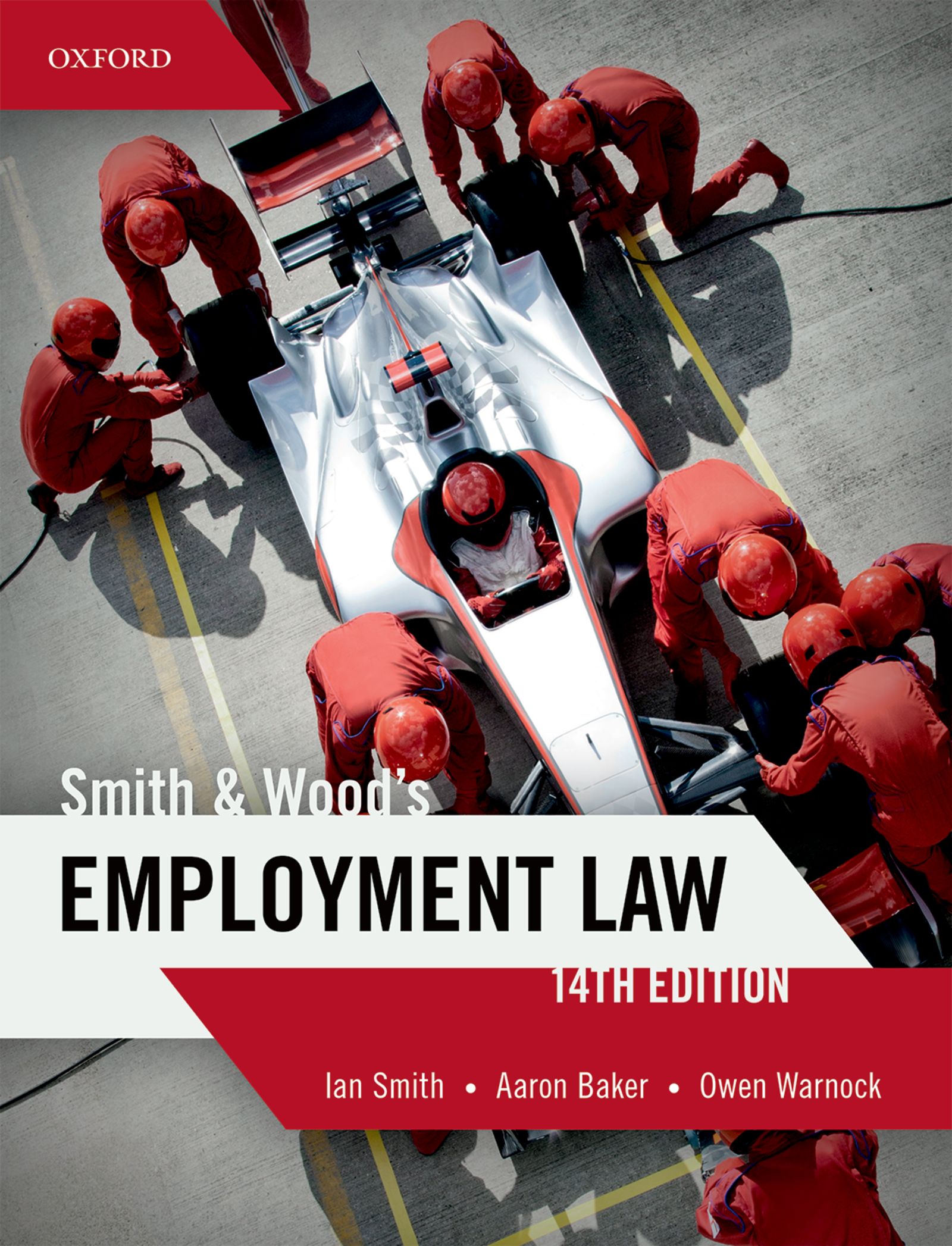
Book review: Smith & Wood's Employment Law (14th Edition)

“Smith gives us the panoramic view, seamlessly welding together old authorities with developments up to the end of February 2019”
  • Authors: Ian Smith, Aaron Baker & Owen Warnock
  • Publisher: Oxford University Press
  • ISBN: 978-0198824893
  • RRP: £37.99

Employment law ‘…is certainly one of the most difficult areas of law in which to keep up to date.’ The first sentence of this fine work is indisputably accurate. I cannot suggest any area of law which is so fickle and prone to protracted contortions.

The most fundamental issues remain elusive. Who counts as a worker? Is someone required to be on the premises, at a care home for example, entitled to receive the minimum wage even when they are tucked up and fast asleep? Both of these problems are awaiting determination by the Supreme Court. Imagine if we didn’t know what a contract was, or to whom a tortious duty was owed.

The law of master & servant

The reader gets just under 800 pages

If you are not a subscriber, subscribe now to read this content
If you are already a subscriber sign in
...or Register for two weeks' free access to subscriber content

MOVERS & SHAKERS

University of Manchester: The LLM driving tech-focused career growth

University of Manchester: The LLM driving tech-focused career growth

Manchester’s online LLM has accelerated career progression for its graduates

mfg Solicitors—Philip Chapman

mfg Solicitors—Philip Chapman

Regional firm strengthens corporate team with partner hire

Switalskis—Sally Christey, Mathew Abiagom & Cyman Kaur

Switalskis—Sally Christey, Mathew Abiagom & Cyman Kaur

Commercial property team expands with trio of appointments

NEWS
Judging is ‘more intellectually demanding than any other role in public life’—and far messier than outsiders imagine. Writing in NLJ this week, Professor Graham Zellick KC reflects on decades spent wrestling with unclear legislation, fragile precedent and human fallibility
The long-predicted death of the billable hour may finally be here—and this time, it’s armed with a scythe. In a sweeping critique of time-based billing, Ian McDougall, president of the LexisNexis Rule of Law Foundation, argues in this week's NLJ that artificial intelligence has made hourly charging ‘intellectually, commercially and ethically indefensible’
From fake authorities to rent reform, the civil courts have had a busy start to 2026. In his latest 'Civil way' column for NLJ this week, Stephen Gold surveys a procedural landscape where guidance, discretion and discipline are all under strain
Fact-finding hearings remain a fault line in private family law. Writing in NLJ this week, Victoria Rylatt and Robyn Laye of Anthony Gold Solicitors analyse recent appeals exposing the dangers of rushed or fragmented findings
As the Winter Olympics open in Milan and Cortina, legal disputes are once again being resolved almost as fast as the athletes compete. Writing in NLJ this week, Professor Ian Blackshaw of Valloni Attorneys examines the Court of Arbitration for Sport’s (CAS's) ad hoc divisions, which can decide cases within 24 hours
back-to-top-scroll