header-logo header-logo

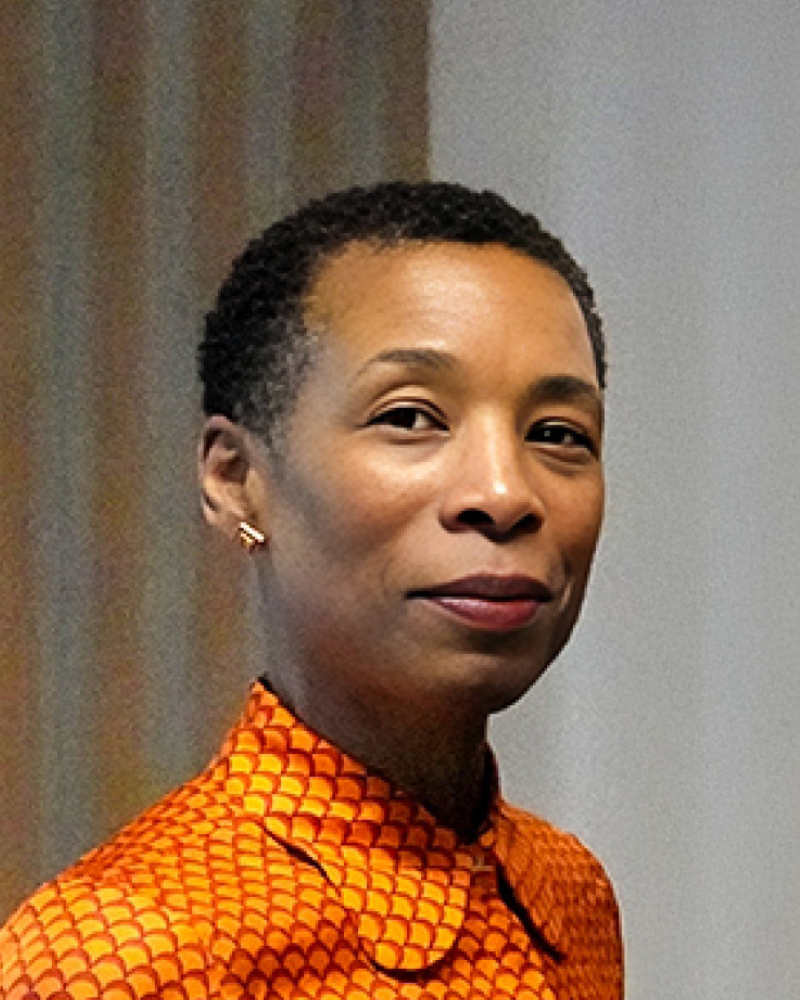
FOIL—Bridget Tatham

27 November 2025
Categories: Movers & Shakers , Profession
printer mail-detail
Forum of Insurance Lawyers elects president for 2026

Bridget Tatham, partner at Browne Jacobson, has been elected president of the Forum of Insurance Lawyers (FOIL) for 2026, succeeding Howard Dean of Keoghs. An employer’s liability and public liability specialist with more than 30 years’ experience, she will draw on her background in complex claims–from occupational disease to life-changing injuries–and her current role as chair of FOIL’s diversity, equity and inclusion committee. Her presidency comes as the insurance sector faces geopolitical instability, inflationary pressures and mounting environmental and technological risks.

Tatham will champion FOIL’s DEI agenda, focusing on the practical business benefits of more inclusive workplaces. FOIL’s programmes, including its events and DEI toolkit, will continue promoting the advantages of diverse teams. She said she is ‘honoured to take on the role’, noting that insurers and their legal teams face ‘significant pressures’ from claims inflation, emerging markets and regulatory developments. ‘Building an inclusive and equitable environment remains central to our work,’ she said, adding that inclusive collaboration ‘strengthens innovation’ and broadens representation and leadership opportunities.

A key priority for her presidency will be supporting the next generation of insurance lawyers. FOIL’s sector focus teams already provide dedicated seats for Tomorrow’s FOIL members to ensure junior lawyers have a voice. The organisation will also continue monitoring the impact of the Mazur judgment, which raises issues around access to justice and legal careers. Tatham said FOIL will provide ‘insight, support, and a strong voice’ on matters affecting members while fostering a safe space for open discussion.

FOIL CEO Laurence Besemer said Tatham is an ‘excellent choice’ to lead the organisation into 2026, praising her contribution as chair of the DEI subcommittee. FOIL continues to shape policy through consultation responses and lobbying on issues such as ADR and the privatisation of justice across seven jurisdictions. Tatham’s chosen charities for her presidential year are The Solicitor’s Charity and the African Caribbean Community Initiative, and she will be supported by David Mayor of Forbes, who becomes vice-president.

MOVERS & SHAKERS

Clyde & Co—Sian Langer & Gemma Parker

Clyde & Co—Sian Langer & Gemma Parker

Firm strengthens catastrophic injury capability with partner promotions

DWF—Dean Gormley

DWF—Dean Gormley

Finance and restructuring team offering expands in Manchester with partner hire

Taylor Rose—Vicki Maflin

Taylor Rose—Vicki Maflin

Firm announces appointment of head of remortgage

NEWS
From gender-critical speech to notice periods and incapability dismissals, employment law continues to turn on fine distinctions. In his latest employment law brief for NLJ, Ian Smith of Norwich Law School reviews a cluster of recent decisions, led by Bailey v Stonewall, where the Court of Appeal clarified the limits of third-party liability under the Equality Act
Non-molestation orders are meant to be the frontline defence against domestic abuse, yet their enforcement often falls short. Writing in NLJ this week, Jeni Kavanagh, Jessica Mortimer and Oliver Kavanagh analyse why the criminalisation of breach has failed to deliver consistent protection
Assisted dying remains one of the most fraught fault lines in English law, where compassion and criminal liability sit uncomfortably close. Writing in NLJ this week, Julie Gowland and Barny Croft of Birketts examine how acts motivated by care—booking travel, completing paperwork, or offering emotional support—can still fall within the wide reach of the Suicide Act 1961
The long-awaited Getty Images v Stability AI judgment arrived at the end of last year—but not with the seismic impact many expected. In this week's issue of NLJ, experts from Arnold & Porter dissect a ruling that is ‘historic’ yet tightly confined
The UK Supreme Court may be deciding fewer cases, but its impact in 2025 was anything but muted. In this week's NLJ, Professor Emeritus Brice Dickson of Queen’s University Belfast reviews a year marked by historically low output, a striking rise in jointly authored judgments, and a continued decline in dissent. High-profile rulings on biological sex under the Equality Act, public access to Dartmoor, and fairness in sexual offence trials ensured the court’s voice carried far beyond the Strand
back-to-top-scroll