



SMD v LMD [2014] EWHC 302 (Fam), [2014] All ER (D) 282 (Mar)
Deutsche Bank AG v Office for Harmonisation in the Internal Market (Trade Marks and Designs) T-291/12, [2014] All ER (D) 279 (Mar)
TW v Enfield Borough Council [2014] EWCA Civ 362, [2014] All ER (D) 292 (Mar)
Geoffrey Bindman QC considers the moral minefield of picking & choosing clients
Le Rayon d’or SARL v Ministre de l’Economie et des Finances C-151/13, [2014] All ER (D) 280 (Mar)
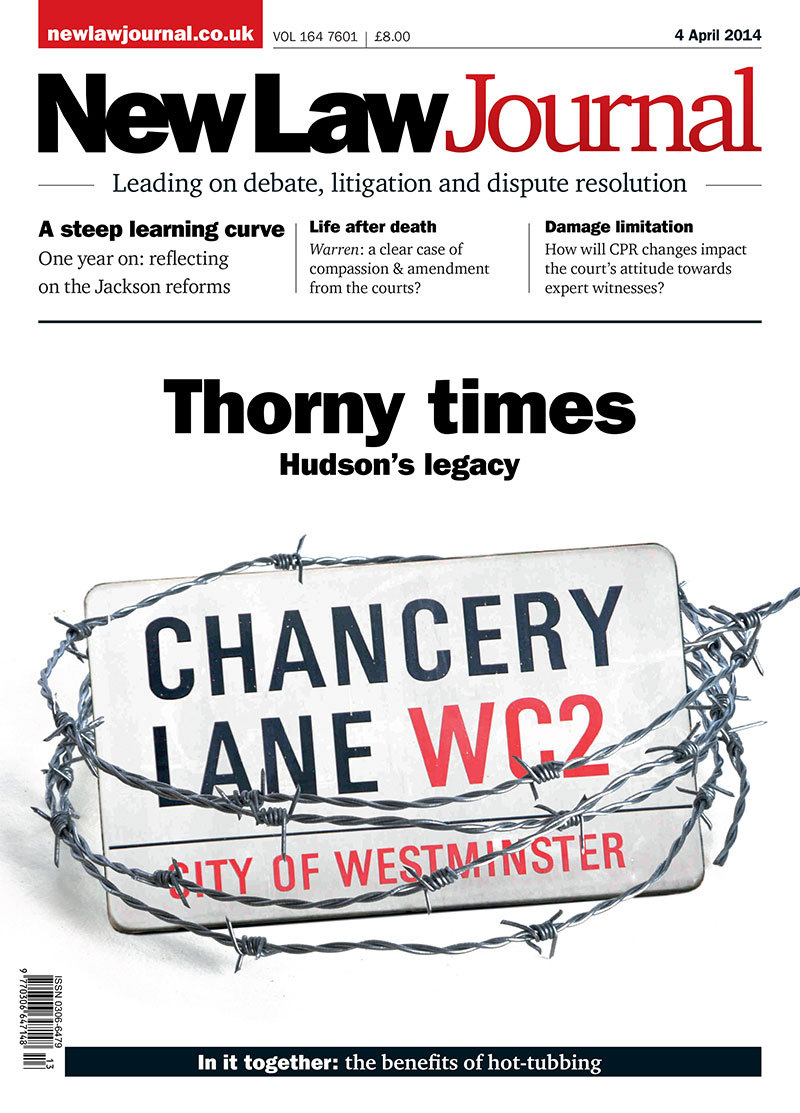
Reflecting on the legacy of the departing Law Society chief exec
As Des Hudson announces his Law Society departure, Jon Robins reflects on his rollercoaster tenure
Winners of LawWorks and Attorney General Student Pro Bono awards announced
Bar Council & ACL focus on LASPO impact
Criminal solicitors take direct action


MOVERS & SHAKERS


Clarke Willmott—Alexia Haines & Kelsey Wells
Clarke Willmott strengthens Birmingham private client team with double appointment

NLJ Career Profile: Hugo Plowman, Mishcon de Reya
From global fraud cases to fishing off-grid, Mishcon de Reya’s chair of dispute resolution Hugo Plowman discusses mentors, management switching off

Maguire Family Law—Jennifer Hudec, Ciara Florey, Alice Ferguson & Ruth Wynn
Maguire Family Law announces partner promotion and new hires amid a record year for enquiries

