

THIS ISSUE


Key legal principles and industry implications
Patricia Robertson QC, Ben Lynch QC and Dr Deborah Horowitz, Fountain Court Chambers
Jonathan Fisher QC reports on responding to new fraud risks in the COVID-19 era
A month on from WM Morrison Supermarkets v Various Claimants being published, Nicholas Dobson reflects on where things went awry on the long & winding road to the final appeal court
Sailesh Mehta & Mahesh Karu drill down on social media & serious crime
The use of social media, ‘drill music’ and the glamorisation of gang lifestyle continues to be a controversial issue among criminal practitioners
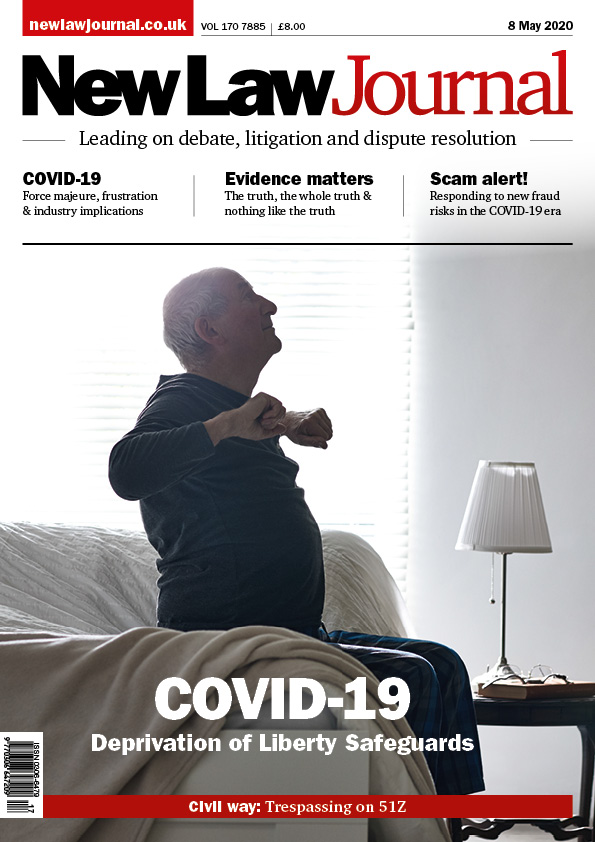
Laura Davidson discusses an urgent Court of Protection hearing held over Skype which demonstrates the powerful & competing rights & interests of care home residents lawfully deprived of their liberty during the coronavirus pandemic
Lawyers will have to get to grips with a range of risks, frauds, scams and compliance issues arising in response to the COVID-19 pandemic
Peter Thompson QC questions the reasoning behind recent changes to the statement of truth

MOVERS & SHAKERS


Browne Jacobson—Caroline Barker & Tom Walker
Browne Jacobson recruits regulatory experts Caroline Barker and Tom Walker to bolster health, government and corporates practices

Jackson Lees Group—Paul Harrison, Helen Innes & Sorcha McMullan
Partner and paralegals bolster clinical negligence team at Jackson Lees Group

Stone King—Manchester
Stone King triples Manchester footprint with office move as law firm’s rapid growth journey continues
NEWS
Group claims, disputed costs and judicial recruitment dominate the latest courtroom round-up
Landlords face fresh registration duties as procedural reforms reshape the civil courts
Sanctions can derail commercial disputes long before judgment, making early planning essential
Pressure is mounting for a dedicated UK AI law, but deciding what it should achieve remains the central challenge
Legal professional privilege has checked the SRA’s investigative powers, exposing difficult questions about tackling suspected abusive litigation
Copyright © 2026 LexisNexis

