

THIS ISSUE
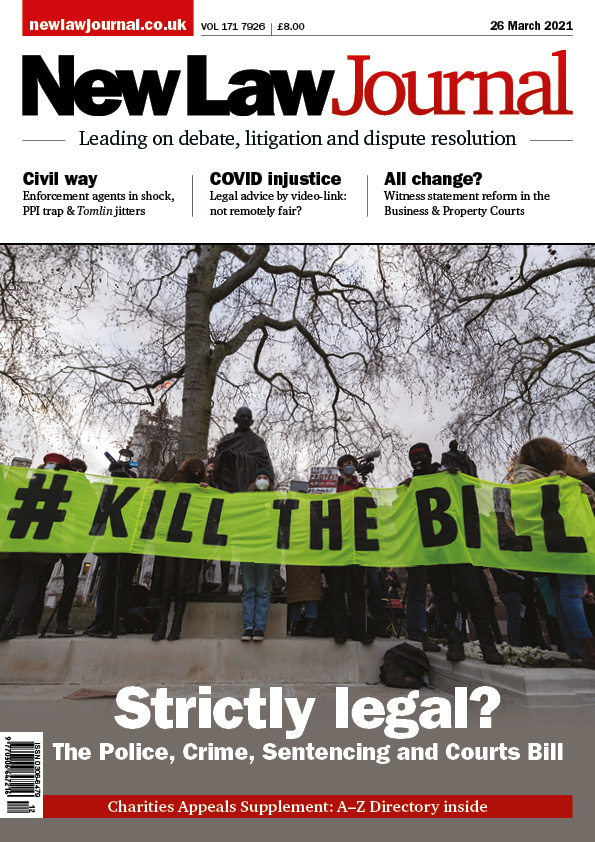

NLJ's Charities Appeals Supplement has been published in this week's issue
The methodology for the proposed Guideline Hourly Rates (GHR) ‘materially understates the average market rate’, Julian Chamberlayne, Chair of the Forum of Complex Injury Solicitors writes in this week’s NLJ
The Tomlin order came under fire in a recent Court of Appeal case, NLJ columnist Stephen Gold reports in this week’s Civil Way

John Brown highlights some shortcomings in the Guideline Hourly Rates Review
Simon Parsons hails the Law Commission’s proposed reforms to the misconduct in public office offence
UK charities are facing the challenge of securing funding and ensuring compliance with a range of new rules after Brexit. Stephen Cole & Oliver Silk discuss what charities now need to consider
Conflict, property & indemnity in inter-charity dealings, investigated by Keith Wallace
Good lawyers are ten a penny, but clients expect & deserve more. Declan Vaughan outlines the values underpinning his firm’s ‘National Powerhouse’ strategy
Tommy Tanked; Online going off a bit; That Was the Week That Was; PPI trap; Tenants stay put

MOVERS & SHAKERS


Browne Jacobson—Caroline Barker & Tom Walker
Browne Jacobson recruits regulatory experts Caroline Barker and Tom Walker to bolster health, government and corporates practices

Jackson Lees Group—Paul Harrison, Helen Innes & Sorcha McMullan
Partner and paralegals bolster clinical negligence team at Jackson Lees Group

Stone King—Manchester
Stone King triples Manchester footprint with office move as law firm’s rapid growth journey continues
NEWS
Pressure is mounting for a dedicated UK AI law, but deciding what it should achieve remains the central challenge
Legal professional privilege has checked the SRA’s investigative powers, exposing difficult questions about tackling suspected abusive litigation
Group claims, disputed costs and judicial recruitment dominate the latest courtroom round-up
Landlords face fresh registration duties as procedural reforms reshape the civil courts
Refusing mediation need not trigger a costs penalty, but litigators must justify their position
Copyright © 2026 LexisNexis

