

THIS ISSUE
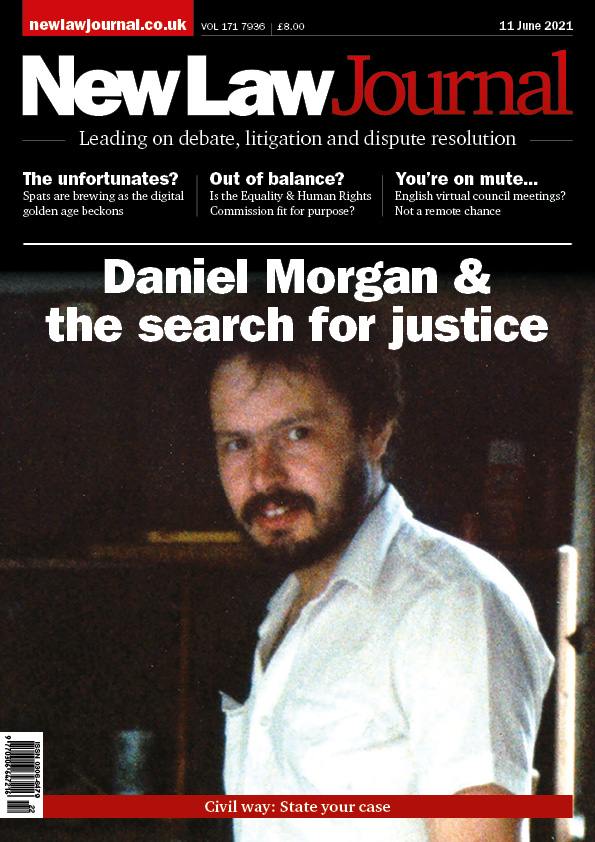

Is the Equality and Human Rights Commission still fit for purpose? What has happened to equality law? Writing in this week’s NLJ, Geoffrey Bindman QC, senior consultant, Bindmans, investigates the state of the equality enforcer.
Judge goes rogue, employees stay home, planes grounded
Looking for a digital future while dealing with ‘utter mess’ whiplash reforms

The unfortunates? Spats are brewing as the digital golden age beckons, says Dominic Regan
Is the Equality & Human Rights Commission no longer fit for purpose? Geoffrey Bindman examines its death by a thousand cuts
Ian Smith investigates a gap in protection for workers in the ‘gig economy’
English virtual council meetings? Not a remote chance. Nicholas Dobson reports
State your case!; the midnight count; up the workers; new family guidance; no bundle fun in Admin Court; look, no captain.
Masood Ahmed examines the scenario of challenging arbitral awards for inadequate reasons

MOVERS & SHAKERS


Slater Heelis—Probate & Court of Protection team
Slater Heelis brings Probate and Court of Protection expertise together with new dedicated team

Clarke Willmott—Antonia Power
Antonia Power joins Clarke Willmott in Taunton

Haynes Boone—Chris Acton
Chris Acton joins Haynes Boone as chair of UK derivatives platform
NEWS
Civil practitioners face changes spanning debt recovery, workplace harassment and possession claims, alongside guidance on insolvency challenges and children proceedings
Finding matrimonial wealth is as challenging as dividing it, as family disputes draw practitioners into asset tracing, offshore structures and insolvency
Agreement between opponents offers no guarantee that a court will approve a retrospective increase to a costs budget
Climate change belongs on every lawyer’s agenda, with risks extending far beyond environmental practice into commercial advice, litigation and access to justice
Workplace bullying and harassment can no longer be left solely to HR, as financial regulation scrutinises culture, character and fitness
Copyright © 2026 LexisNexis

