

THIS ISSUE
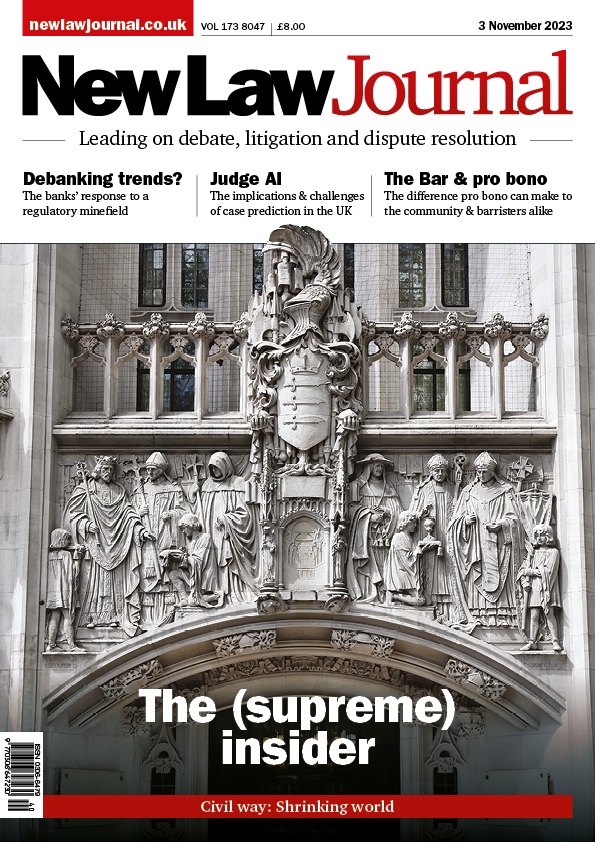


Nick Vineall KC explores the difference pro bono can make to the community & barristers alike
Jeffrey Wale wonders about the future of open justice as the civil justice digitisation process rolls on
Simon Walton highlights disturbing bias inherent in AI case prediction tools
Jago Russell and Ross Ludlow explain the reasons behind the trend for de-banking
New pre-trial checklists; Intermediate track hearing fee; No fault possession; Help with Fees revamped
Caroline Field covers recent developments in the use of non-compete clauses to control ex-employees
Michael L Nash considers the role of the King as diplomat
Nick Wrightson asks searching questions about the nature of public inquiries
In his second article on anonymisation in family proceedings, David Burrows considers what, in law, does anonymisation mean?

MOVERS & SHAKERS


Clarke Willmott—Alexia Haines & Kelsey Wells
Clarke Willmott strengthens Birmingham private client team with double appointment

NLJ Career Profile: Hugo Plowman, Mishcon de Reya
From global fraud cases to fishing off-grid, Mishcon de Reya’s chair of dispute resolution Hugo Plowman discusses mentors, management switching off

Maguire Family Law—Jennifer Hudec, Ciara Florey, Alice Ferguson & Ruth Wynn
Maguire Family Law announces partner promotion and new hires amid a record year for enquiries
NEWS
Restrictions on workplace non-disclosure agreements could make settlements slower, more complex and more expensive when reforms expected in 2027 take effect
Private prosecutors face closer scrutiny under Crown Prosecution Service guidance designed to strengthen accountability and consistency when intervention is requested
Foreign states cannot necessarily claim immunity for cyber operations launched abroad against computers in Britain, following a divided Supreme Court ruling
Defendants who make unsupported complaints about their lawyers risk losing legal aid while confiscation proceedings continue without representation
Lawyers advising Russian clients face different sanctions restrictions across the UK, EU and US, despite their shared objective of increasing pressure on Russia
Copyright © 2026 LexisNexis

