

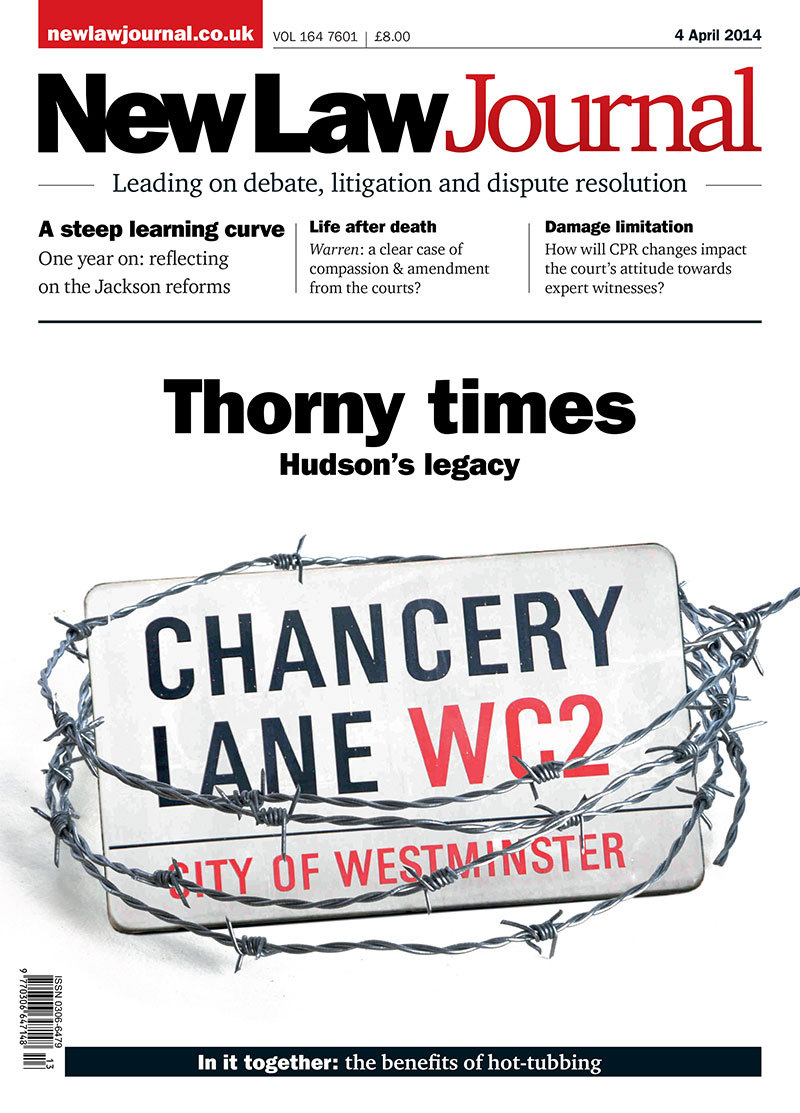

Second NLJ/LSLA Litigation Trends Survey tracks impact one year on from Jackson

One year on, David Greene assesses the impact of Jackson
Jonathan Herring explores a clear case of compassion from the courts
FOS awards cannot be used as a springboard for litigation, says Adam Edwards
Janna Purdie provides an overview of the forthcoming CPR changes
Sandy Mackay highlights the benefits of early expert witness meetings
Martin Burns explains hot-tubbing & how it helps judges decide cases
How will Jackson impact on the courts’ attitude towards expert evidence? Paul Phillips investigates
Geden Operations Ltd v Dry Bulk Handy Holdings Inc [2014] EWHC 885 (Comm), [2014] All ER (D) 271 (Mar)
Leni Gas & Oil Investments Ltd and another v Malta Oil PTY Ltd and another [2014] EWHC 893 (Comm), [2014] All ER (D) 272 (Mar)

MOVERS & SHAKERS


NLJ Career Profile: Hugo Plowman, Mishcon de Reya
From global fraud cases to fishing off-grid, Mishcon de Reya’s chair of dispute resolution Hugo Plowman discusses mentors, management switching off

Maguire Family Law—Jennifer Hudec, Ciara Florey, Alice Ferguson & Ruth Wynn
Maguire Family Law announces partner promotion and new hires amid a record year for enquiries

Switalskis—Rebecca Parry & Hannah Gamble
Switalskis wills and probate team extends reach with two appointments

