

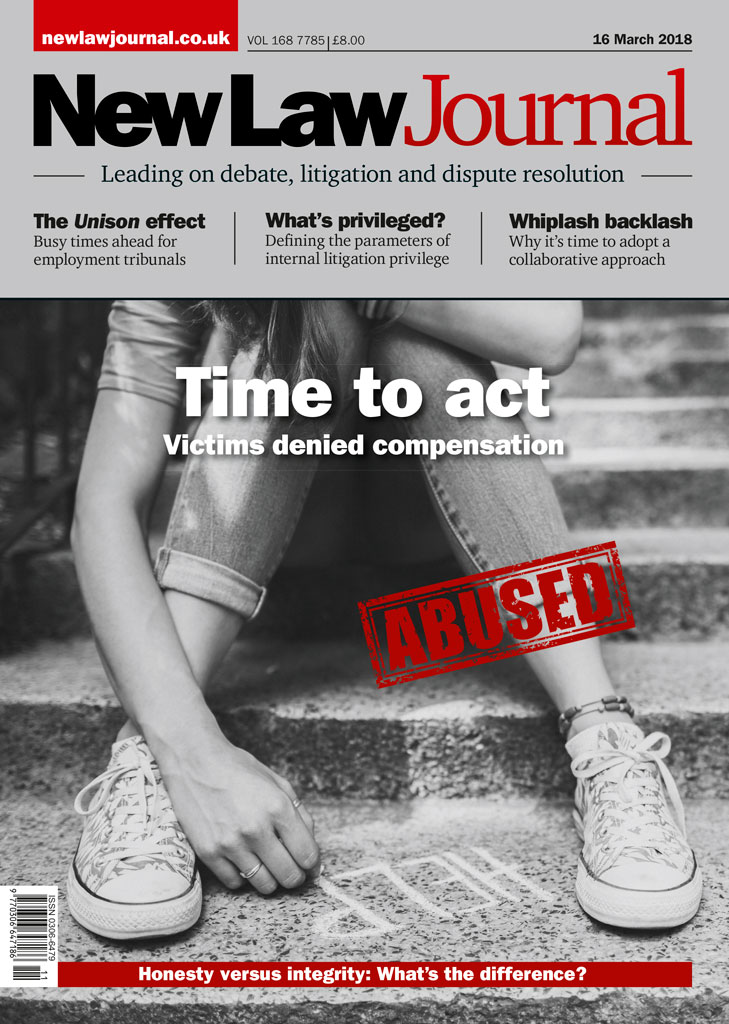


Kim Harrison discusses consent & the Criminal Injuries Compensation Authority in relation to child sexual exploitation
Debate over the ‘compensation culture’ should eschew the insults and focus on common areas of agreement, says Gary Beazleigh
Graeme Fraser discusses extending civil partnerships to opposite-sex couples
Steve Hynes discusses the root causes of a big rise in employment tribunal cases
John Gould explains why honesty & integrity are not the same
Ben Amunwa covers an international commercial dispute over unconscious bias
Charting the latest developments on the ‘road to Brexit’
Alan Sheeley & Emilie Jones review the role & scope of litigation privilege in internal investigations
The Director of Public Prosecution’s disclosure nightmare seems to be getting worse by the week. Jon Robins reviews the evidence

MOVERS & SHAKERS


HFW—Nelson Wang
HFW strengthens global insurance practice and Greater China offering with London Partner hire

Burges Salmon—David McEwing
Burges Salmon boosts Energy and Utilities practice with appointment of David McEwing

Browne Jacobson—Alexander Studholme
Browne Jacobson adds international construction arbitration partner in London push
Finding matrimonial wealth is as challenging as dividing it, as family disputes draw practitioners into asset tracing, offshore structures and insolvency

