

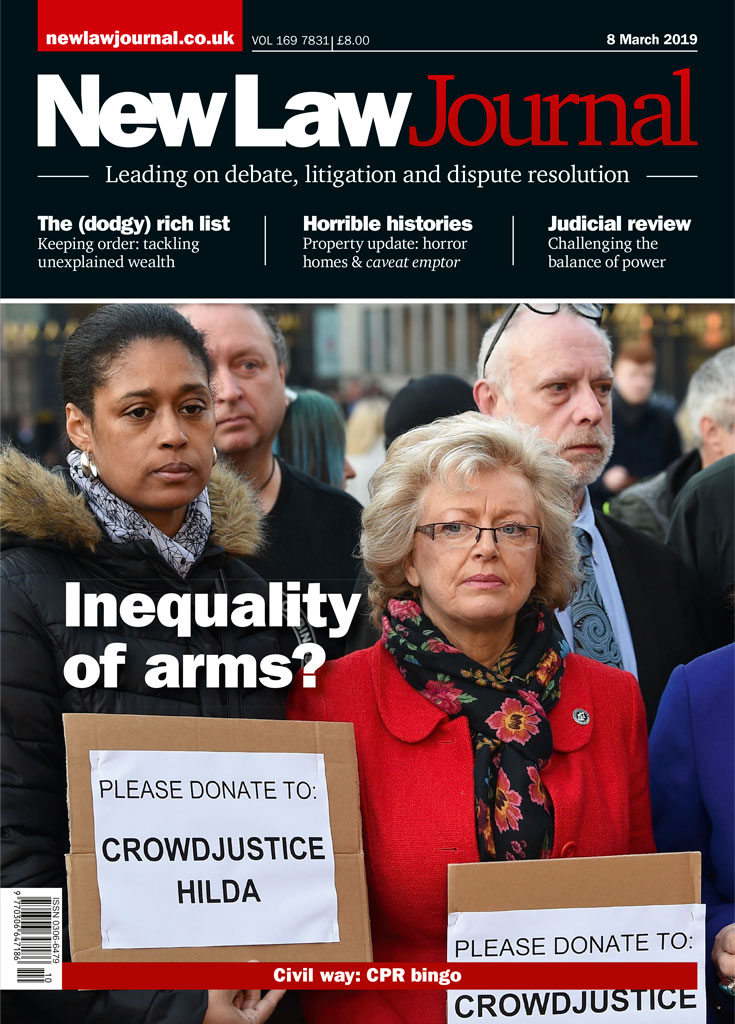


That bereaved families have so little hope of obtaining legal aid for inquests is indicative of the UK’s broken system, says Jonathan Wheeler
In this month’s employment brief, Ian Smith examines the long shadow cast by the infamous ‘gay cake case’ & takes a look at some exceptions to the unfair dismissal rule
Aziz Rahman considers the implications of a possible increase in the use of unexplained wealth orders by enforcement agencies
In the first of a two-part series, Rawdon Crozier investigates ‘the Housing Act trap’…& plots a potential escape
Mark Pawlowski asks whether there is a duty to disclose the gruesome history of a house on the sale of a property
New CPR updates; pleading shorthand blessed; week’s pay fattened up; (no) time to pay.
In the first part of a series of three articles, Simon Parsons investigates judicial review of executive action
Geoffrey Bindman reflects on the life & career of Lord Birkenhead

MOVERS & SHAKERS


Bellevue Law—Sara Mason
Bellevue Law expands workplace law offering with specialist healthcare regulatory appointment

Seddons GSC—Peter Ames
Seddons GSC strengthens Dispute Resolution team with partner hire

Taylor Rose—four promotions
Taylor Rose announces partner promotions

