

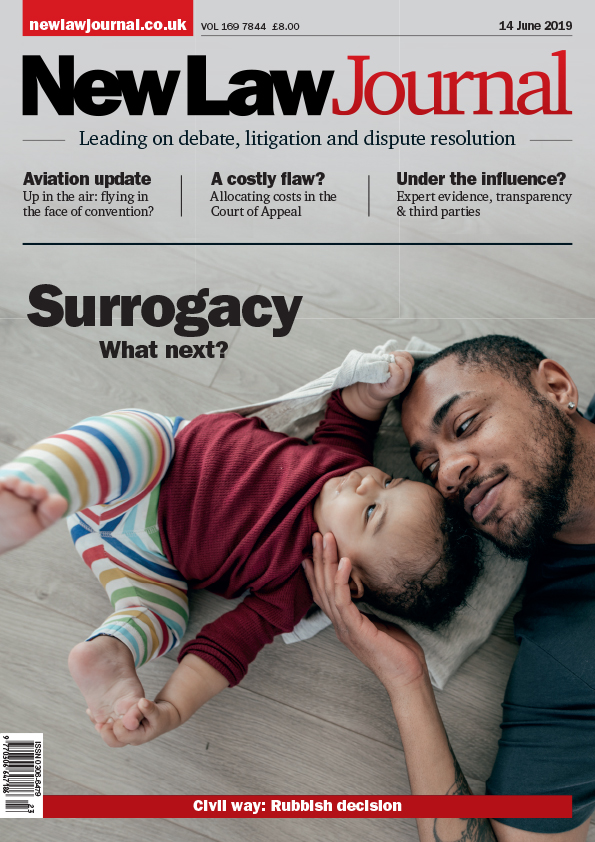


Professor Nick Hopkins discusses the Law Commissions’ consultation on surrogacy & what happens next
When does psychiatric injury sustained onboard become compensable? Katherine Deal QC & Asela Wijeyaratne review the latest evidence
Do landlords have to be both registered and licensed when serving a section 21 notice? DJ Hywel James considers the lessons from Evans v Fleri
Giles Eyre & Dr Linda Monaci provide practical insight into assessing a testator’s capacity after their death
Jofa highlights a procedural problem in relation to the fair allocation of costs in the Court of Appeal, as Graeme Kirk explains
Family misconduct; ‘Best Endeavours’ breach; High Court: keep out; tribunals ready on tenant fees; new Act for the missing
Mark Solon sizes up the risks of making false statements: go directly to jail, do not pass go, & do not collect £350,000

MOVERS & SHAKERS


NLJ Career Profile: Hugo Plowman, Mishcon de Reya
From global fraud cases to fishing off-grid, Mishcon de Reya’s chair of dispute resolution Hugo Plowman discusses mentors, management switching off

Maguire Family Law—Jennifer Hudec, Ciara Florey, Alice Ferguson & Ruth Wynn
Maguire Family Law announces partner promotion and new hires amid a record year for enquiries

Switalskis—Rebecca Parry & Hannah Gamble
Switalskis wills and probate team extends reach with two appointments

