

THIS ISSUE


Kate Bex QC & Tom Jones consider the route to pursuing a case against the complainant’s choice
Neil Parpworth believes maiden speeches in the House of Commons in their current form are an extravagance which ought to come to an end
Shantanu Majumdar QC considers some aspects of the supposed division between arbitration & litigation
Masood Ahmed serves up a timely reminder that only offers inclusive of interest are valid under Part 36
Letitia Egan & Nicholas Whitehorn review the evidence for reforming the abortion law in the UK
Gross negligence manslaughter: when is there a serious & obvious risk of death? Simon Parsons examines the evidence
Nicholas Dobson revisits the Tate Gallery & discovers that mere overlooking is not nuisance
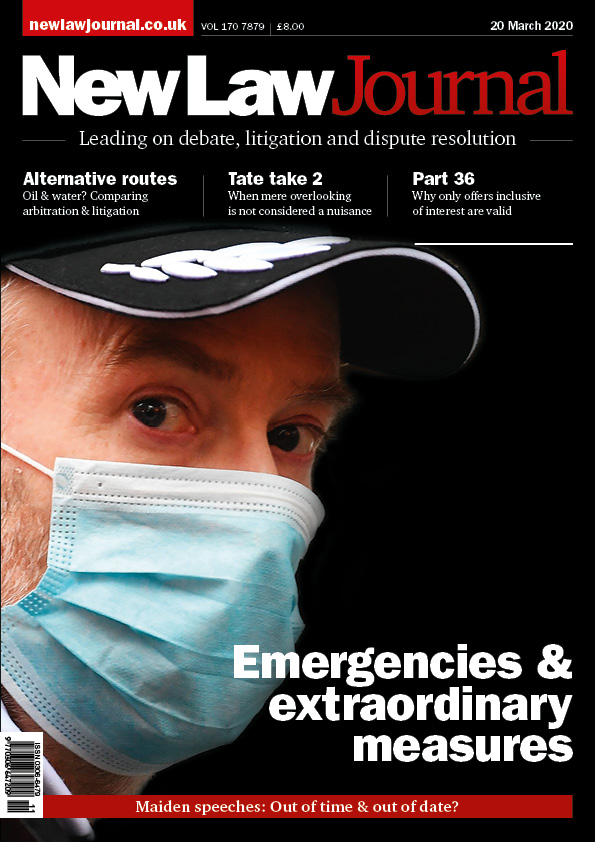
In a time of crisis what measures can the government introduce under the Civil Contingencies Act 2004? Michael Nash reports
With the UK currently not on track to meet legally-binding net-zero carbon targets, Martin Baxter & Safia Iman consider how successive governments can be held to account

MOVERS & SHAKERS


Weightmans—Jason Slatcher
Weightmans appoint new Chief Technology Officer

Mishcon de Reya—trainees
Mishcon de Reya announces trainee retention rate of 86%

Sackers—Charlotte Adams & Fraser Sutton
Sackers welcomes two new Graduate Solicitor Apprentices
NEWS
LexisNexis will mark the 80th anniversary of Shawcross and Beaumont on Air Law with a live podcast exploring the evolution of aviation law from the Chicago Convention to the challenges facing modern aerospace, taking place on Tuesday 29 September
Harmony Christian Ministries is the latest charity to benefit from a £500 donation from AlphaBiolabs via the company’s Giving Back initiative
Foreign judgment creditors have gained a route to recovery after the Supreme Court’s ruling in Drelle v Servis-Terminal
Surrogacy is growing in popularity, but parents-to-be face a complex legal framework
Winning a judgment may be only the beginning of an expensive enforcement battle, writes Professor Dominic Regan in this week's NLJ
Copyright © 2026 LexisNexis

