



Jon Robins examines the initial response of the legal industry to the Legal Services Act
Are the MoJ’s claims about DPAs more mythical than real, asks David Corker
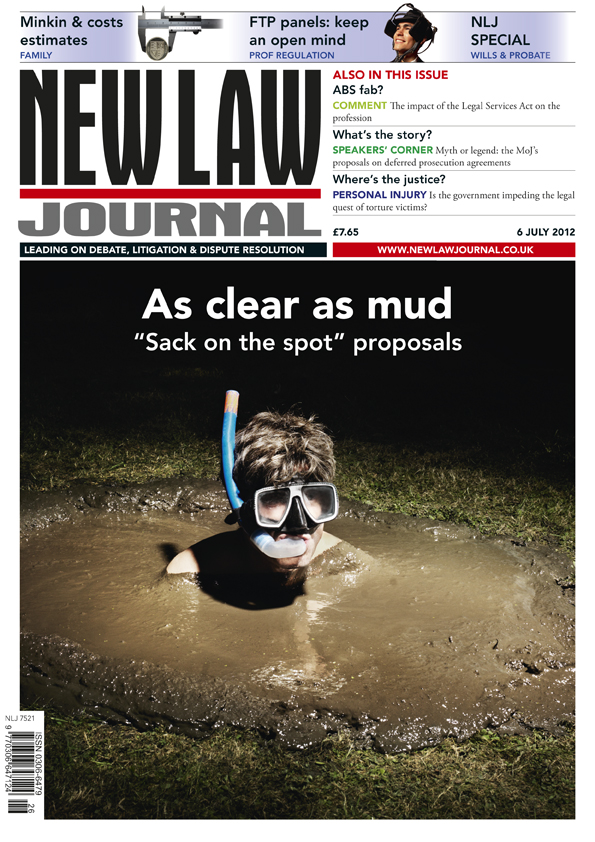
The waters are still muddied over Beecroft “sack on the spot” proposals, notes Charles Pigott
Minkin provides a reminder of the importance of accurate costs estimates, notes Shelley Cumbers
Is the government attempting to impede the quest for justice of torture victims, asks Richard Scorer
Emma Humphreys & Malcolm Dowden dissect the recent Law Commission e-comms code consultation
Hayley Tam & Ben Du Feu examine the outcome of the recent Rio+20 UN Conference on Sustainable Development
Clare Collier examines how discrimination is justified in relation to welfare benefit entitlement
Philippa Daniels maps the conclusion of a repatriation struggle
Melanie McDonald calls for FTP panels to be more accepting of hearsay evidence

MOVERS & SHAKERS


HFW—Nelson Wang
HFW strengthens global insurance practice and Greater China offering with London Partner hire

Burges Salmon—David McEwing
Burges Salmon boosts Energy and Utilities practice with appointment of David McEwing

Browne Jacobson—Alexander Studholme
Browne Jacobson adds international construction arbitration partner in London push
Finding matrimonial wealth is as challenging as dividing it, as family disputes draw practitioners into asset tracing, offshore structures and insolvency

