



As a new legal services provider enters the market, Jon Robins investigates how the profession is responding to change
David Burrows warns of an assault on family law
Mark Hill QC considers the “reasonable accommodation” of religious belief in UK law
Technology & expert advocacy can achieve the best persuasive effect from a schedule of loss, explains Chris Gutteridge
In the first of a special NLJ series, Nicholas Bevan takes the government to task over failures to compensate RTA victims
Jonathan Fowles reviews the latest attempt to wrestle with strict liability for fire damage
Keith Davies considers the vexed question of whether prayers should be said at town council meetings
What standard of proof must the SDT apply to allegations of solicitors’ misconduct, ask Tim Kerr QC & Charles Banner
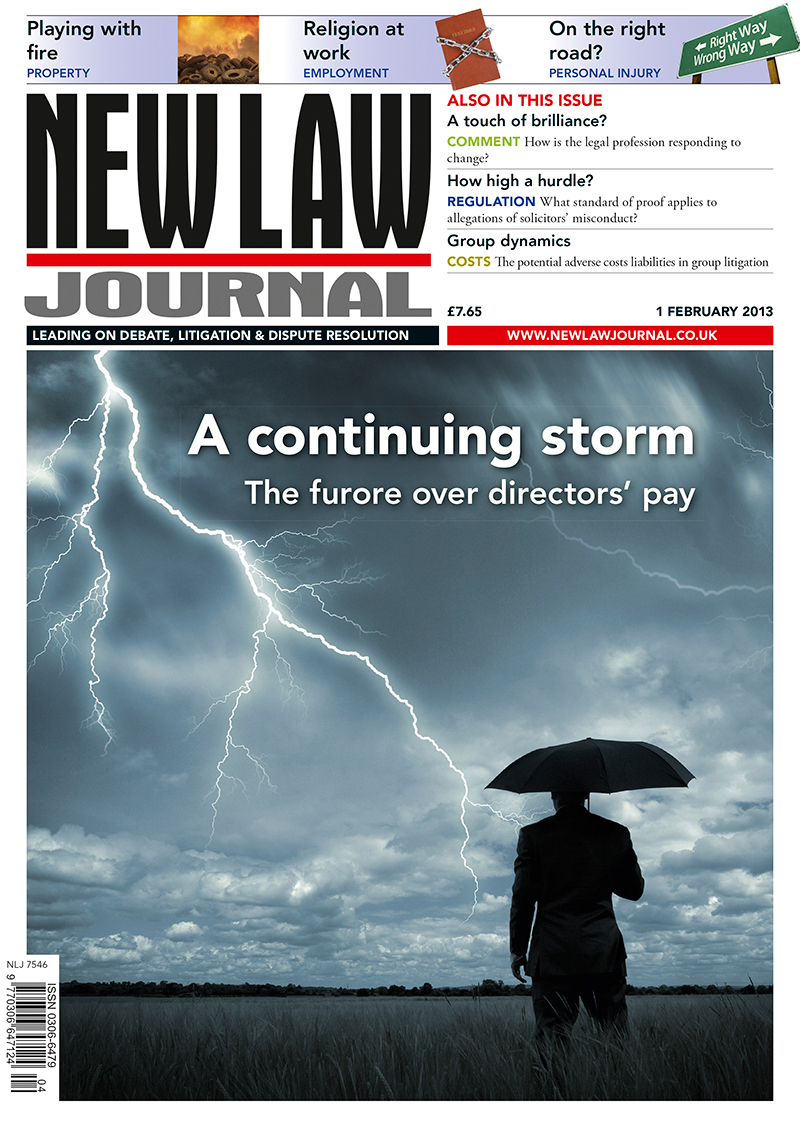
Will government proposals for shareholder votes on directors’ pay be effective. Kathryn Cearns reports
Julian Miller & Dan Silver report on potential adverse costs liabilities in group litigation

MOVERS & SHAKERS


Clyde & Co—Suriya Ashok
Clyde Co strengthens energy transition and construction offering with hire of Suriya Ashok

Jurit—Nicole Gallop Mildon
Jurit appoints rare dual-qualified lawyer to expand Anglo-French private wealth expertise

Twenty Essex—Thomas Hibbs, Jack Hollingworth & Sam Pearce
Three new tenants join Twenty Essex
Safety fears do not automatically justify shutting an interested person out of a statutory will application

