

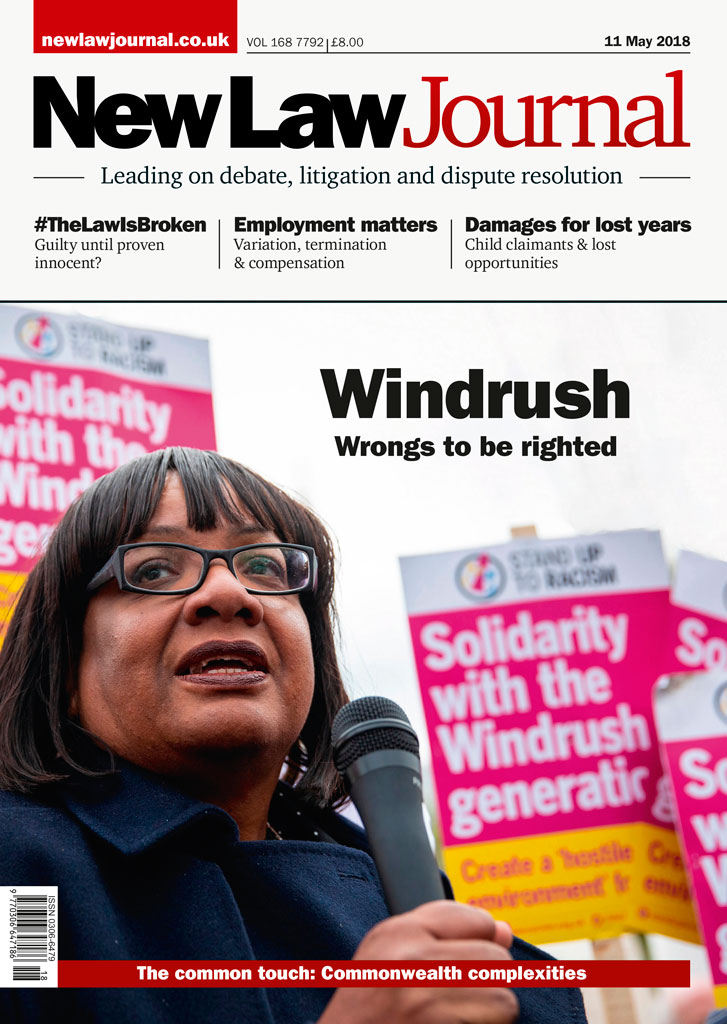


Jon Robins laments the state of a criminal justice system beset by legal aid cuts, unconscious bias & miscarriages of justice
Child claimants as well as adults should be able to recover damages for ‘lost years’, says David Regan
Michael Nash considers the history & complexities of the Commonwealth & salutes a fine British tradition
Duncan Bain fears the hostile environment for the Windrush generation has wider repercussions
Charlotte Hill dissects the much-anticipated judgment in Okpabi v Shell, where accountability for pollution in Nigeria was sought in the English courts
Can litigation funding negate a security for costs application, asks Georgina Squire
Ian Smith gets in line & tackles variation, termination & compensation
Current regime provides little redress for victims of miscarriages of justice

MOVERS & SHAKERS


HFW—Nelson Wang
HFW strengthens global insurance practice and Greater China offering with London Partner hire

Burges Salmon—David McEwing
Burges Salmon boosts Energy and Utilities practice with appointment of David McEwing

Browne Jacobson—Alexander Studholme
Browne Jacobson adds international construction arbitration partner in London push
Finding matrimonial wealth is as challenging as dividing it, as family disputes draw practitioners into asset tracing, offshore structures and insolvency

