


In the first of a special series of LexisNexis Legal Awards Profiles, we speak to David Pryce, the managing partner of 2018's Law Firm of the Year, Fenchurch Law

Richard Harrison considers Hamilton’s written advocacy skills as exemplified in The Reynolds Pamphlet
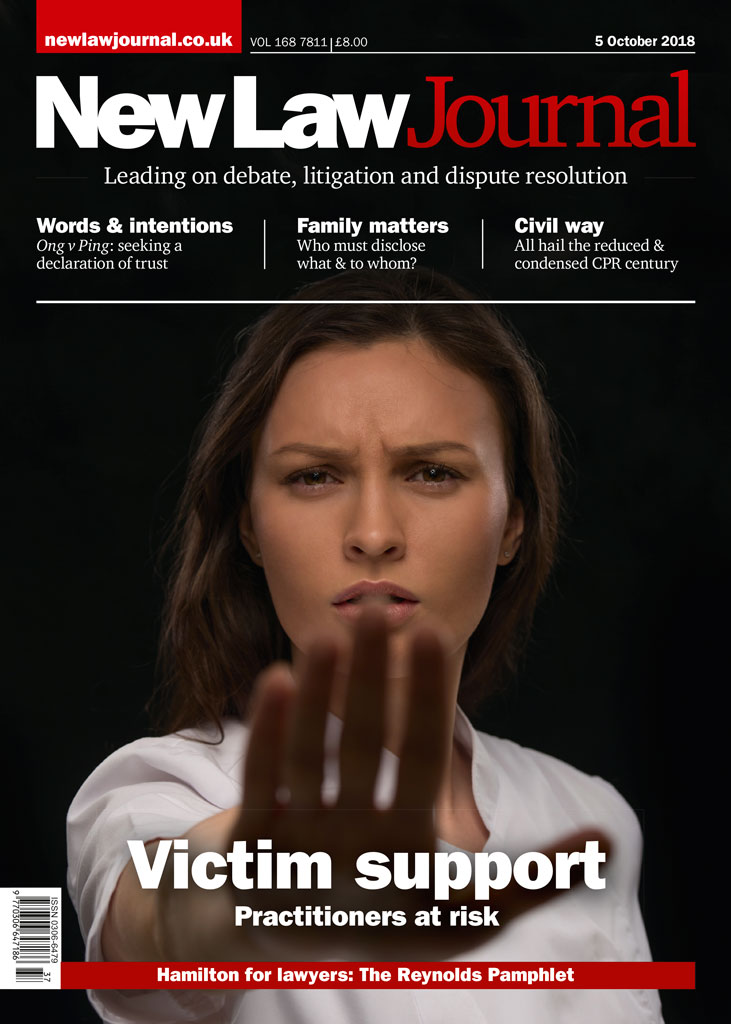
Claire Kitchen shares best practice advice on how to deal with the actions & behaviours of the perpetrators of harassment & stalking
97, 98, 100; new CPR update; bonus for ice cream vans; cold calling targeted.
The High Court rules that the MIB is an emanation of the state. Nicholas Bevan reports.
Can there be an express declaration of trust, without any declaration? Mark Warwick QC investigates
Clarity on non-party documentation: David Burrows investigates the power to order production of documents in family cases
Steve Hynes welcomes the Labour party’s commitment to widening access to justice & hopes the government will track back from LASPO
Modern family types outside marriage for heterosexuals to be recognised

MOVERS & SHAKERS


Clyde & Co—Suriya Ashok
Clyde Co strengthens energy transition and construction offering with hire of Suriya Ashok

Jurit—Nicole Gallop Mildon
Jurit appoints rare dual-qualified lawyer to expand Anglo-French private wealth expertise

Twenty Essex—Thomas Hibbs, Jack Hollingworth & Sam Pearce
Three new tenants join Twenty Essex
Safety fears do not automatically justify shutting an interested person out of a statutory will application

