

THIS ISSUE


Tackling unconscious bias is key to achieving equality, writes Trevor Sterling
Peter de Vena Franks explains why joining the Will Aid campaign can benefit everyone involved
Michael Zander QC on a neglected aspect of the IOPC’s much-criticised report on search warrants obtained in Operation Midland
Constance McDonnell QC examines the year’s most notable 1975 Act decisions
Winston Jacob & Toby Walker analyse the latest approach to costs on discontinuance
David Burrows provides a rundown of child support appeals to the First-tier Tribunal & Upper Tribunal
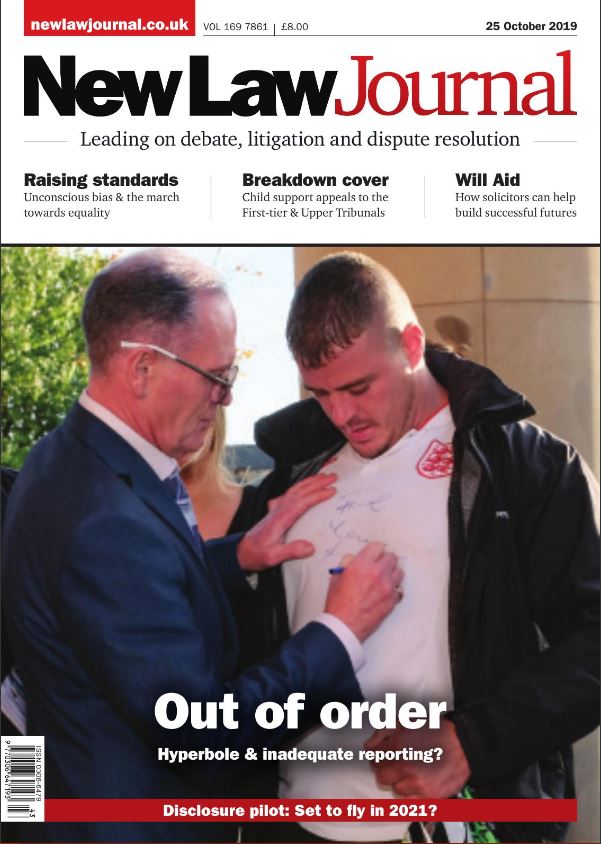
David Locke reflects on the impact of the inadequate reporting of Paul Gascoigne’s recent court case
Ratification of Withdrawal Agreement Bill put on hold… for now
A professor who invented a device vital to diabetes treatment has won a landmark patent case on the determination of ‘outstanding benefit’.

MOVERS & SHAKERS


HFW—Nelson Wang
HFW strengthens global insurance practice and Greater China offering with London Partner hire

Burges Salmon—David McEwing
Burges Salmon boosts Energy and Utilities practice with appointment of David McEwing

Browne Jacobson—Alexander Studholme
Browne Jacobson adds international construction arbitration partner in London push
NEWS
A former senior judge has warned peers against scrapping juries for fraud and financial crimes, ahead of the Courts and Tribunals Bill’s second reading in the House of Lords this week
Civil practitioners face changes spanning debt recovery, workplace harassment and possession claims, alongside guidance on insolvency challenges and children proceedings
Finding matrimonial wealth is as challenging as dividing it, as family disputes draw practitioners into asset tracing, offshore structures and insolvency
Agreement between opponents offers no guarantee that a court will approve a retrospective increase to a costs budget
Climate change belongs on every lawyer’s agenda, with risks extending far beyond environmental practice into commercial advice, litigation and access to justice
Copyright © 2026 LexisNexis

