

THIS ISSUE

Elizabeth Rimmer on why implementing an effective supervision process in remote working could have a positive impact in a legal workplace

Remembrance of things past: Ian Smith reflects on echoes from the past & unravels some current employment conundrums
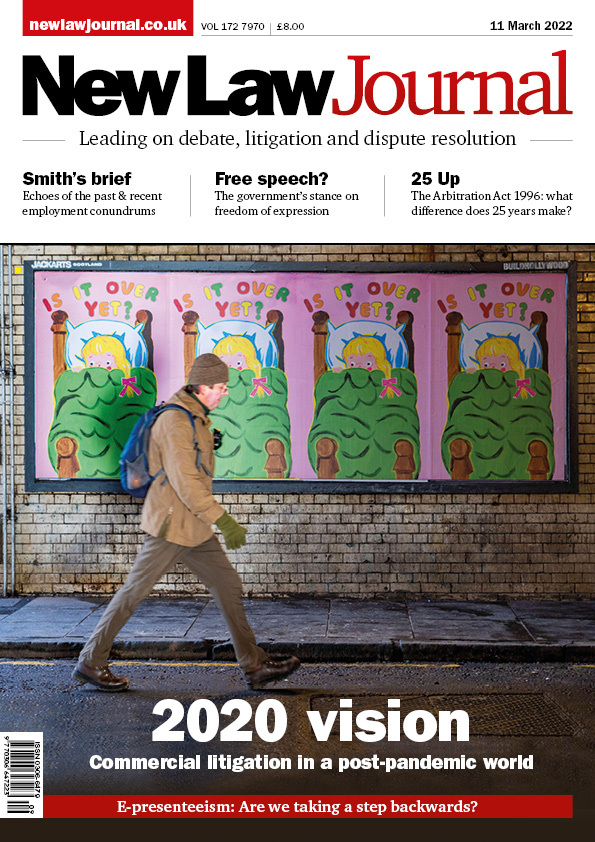
As we dare to hope that lockdown is now behind us, what has changed since the pandemic & how will it impact the practice of commercial litigation in the post-pandemic environment? Michael Frisby reports
Lay litigants left behind: are small claims proceedings in Hong Kong fit for purpose? Dr Ping-fat Sze investigates
Matthew Kay examines the effects of e-presenteeism in the legal sector
It's been 25 years since the Arbitration Act 1996 came into force, so what has worked and what needs reform?
Geoffrey Bindman questions the motives behind the government’s sudden concern for free speech
There has been a rise in disclosures of historic abuse in sport. Writing in this week’s NLJ, David Mayor and Alastair Gillespie, look into what can be done about this shocking issue
Commercial litigation in the post-pandemic world―what can we expect to see?

MOVERS & SHAKERS


Haynes Boone—Chris Acton
Chris Acton joins Haynes Boone as chair of UK derivatives platform

Clarke Willmott—Alexia Haines & Kelsey Wells
Clarke Willmott strengthens Birmingham private client team with double appointment

NLJ Career Profile: Hugo Plowman, Mishcon de Reya
From global fraud cases to fishing off-grid, Mishcon de Reya’s chair of dispute resolution Hugo Plowman discusses mentors, management switching off
NEWS
Law firm Hugh James has successfully batted away Ministry of Defence (MoD) accusations of ‘systematic overcharging’ while pursuing military deafness claims
The Financial Conduct Authority (FCA) has published good and poor practice for financial services firms on the use of artificial intelligence (AI)
International arbitration agreements will become more difficult to enforce due to increased use of artificial intelligence (AI), the Master of the Rolls Sir Geoffrey Vos has warned
Corporate counsel in Europe are leading their global counterparts in pushing junior lawyers into higher-value, strategic roles while artificial intelligence (AI) deals with the humdrum, research shows
The sub judice resolution that prevents MPs from referring to active legal proceedings in the House of Commons is fit for purpose, the Procedure Committee has concluded
Copyright © 2026 LexisNexis

