

THIS ISSUE


Is Dominic Raab’s project doomed? Michael Zander reports on criticism from across the legal spectrum
Amy Zuckerman reports on how lawyers can help their clients deal with the media
When to call a general election: a matter for the prime minister to decide (once again). Neil Parpworth reports on the new Dissolution and Calling of Parliament Act 2022
Andrew Francis provides a masterclass on how best to deploy an expert witness in a property dispute
Matthew Kay investigates the pros & cons of training home-based workers
Ravi Aswani & Valya Georgieva consider a quarter-century of the Arbitration Act 1996: where might it go from here?
Jon Robins laments the rise of politicians trying to look tough on crime
Casey Randall, Head of DNA at AlphaBiolabs, discusses the benefits of prenatal paternity testing for legal proceedings, including when counsel might instruct this test, and how it’s performed at the DNA laboratory
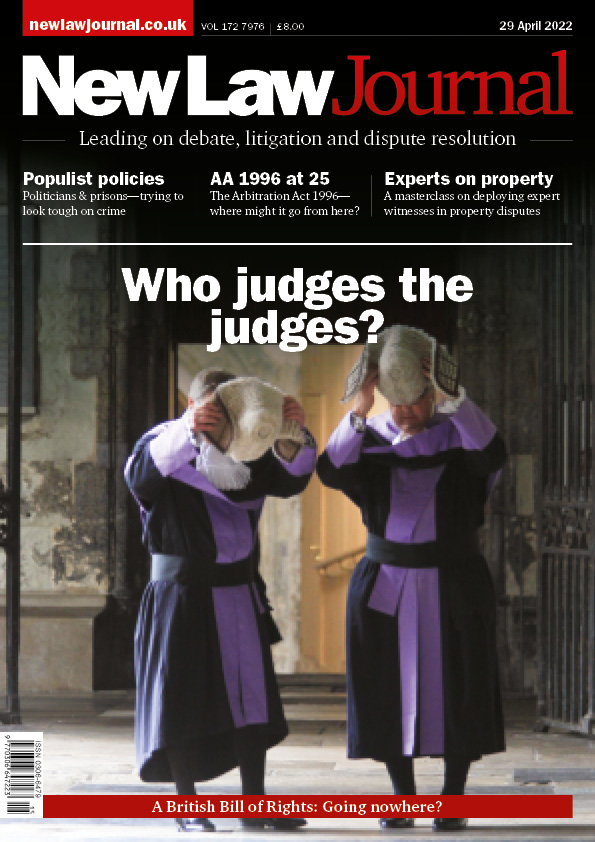
An open & rigorous process for dealing with complaints of judicial misconduct is essential to maintaining public trust, says John Gould

MOVERS & SHAKERS


NLJ Career Profile: Hugo Plowman, Mishcon de Reya
From global fraud cases to fishing off-grid, Mishcon de Reya’s chair of dispute resolution Hugo Plowman discusses mentors, management switching off

Maguire Family Law—Jennifer Hudec, Ciara Florey, Alice Ferguson & Ruth Wynn
Maguire Family Law announces partner promotion and new hires amid a record year for enquiries

Switalskis—Rebecca Parry & Hannah Gamble
Switalskis wills and probate team extends reach with two appointments
NEWS
Restrictions on workplace non-disclosure agreements could make settlements slower, more complex and more expensive when reforms expected in 2027 take effect
Private prosecutors face closer scrutiny under Crown Prosecution Service guidance designed to strengthen accountability and consistency when intervention is requested
Foreign states cannot necessarily claim immunity for cyber operations launched abroad against computers in Britain, following a divided Supreme Court ruling
Defendants who make unsupported complaints about their lawyers risk losing legal aid while confiscation proceedings continue without representation
Lawyers advising Russian clients face different sanctions restrictions across the UK, EU and US, despite their shared objective of increasing pressure on Russia
Copyright © 2026 LexisNexis

