

THIS ISSUE


Ian Gascoigne looks to the Admiralty to scrutinise the role of court-appointed assessors
Employment awards up; Annulment discretion; Supreme 40% hike; Opponent’s costs budget relevant; Northampton troubles; Exceeding statement of value; Manchester defeats London; Company law reforms
How will law firms adapt to & exploit advances in AI? Jan Van Hoecke examines the evidence
Can the CMA compel overseas companies to provide information? Philip Gardner & Abbie Melvin explore the recent case law
Psychologist Dr Tanya Garrett explains the risks of exclusively remote cognitive functioning & capacity assessments
Discrimination in the workplace has been the focus of some notable cases recently. Ian Smith briefs us on four particularly thorny ones
Malcolm Bishop KC looks back on the UK’s role in shaping our European Convention rights
Vivien Davies, Galiya Martirosova & Krysteen Ormond ask: do we have all the guidance we need?
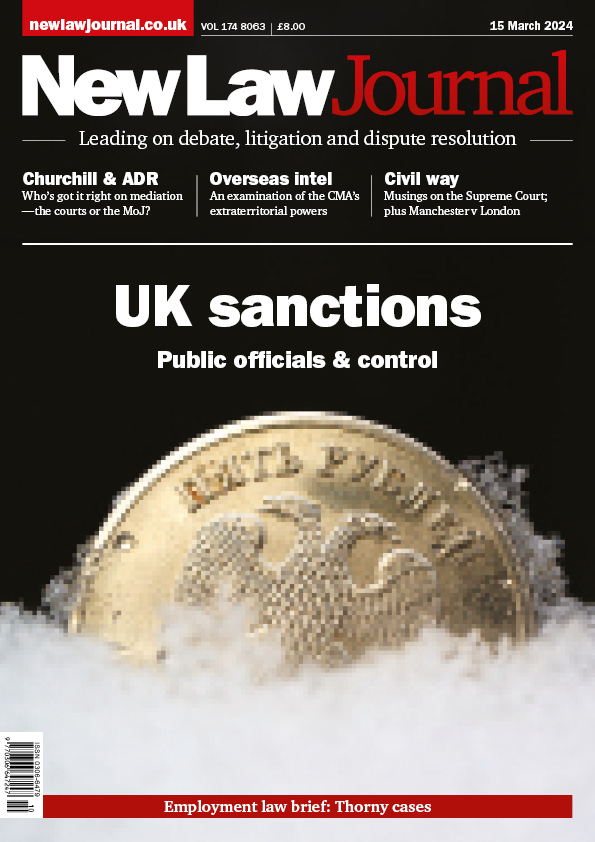
What is the meaning of ‘control’ in the context of international sanctions? Who exercises it? How do we interpret it?

MOVERS & SHAKERS


NLJ Career Profile: Hugo Plowman, Mishcon de Reya
From global fraud cases to fishing off-grid, Mishcon de Reya’s chair of dispute resolution Hugo Plowman discusses mentors, management switching off

Maguire Family Law—Jennifer Hudec, Ciara Florey, Alice Ferguson & Ruth Wynn
Maguire Family Law announces partner promotion and new hires amid a record year for enquiries

Switalskis—Rebecca Parry & Hannah Gamble
Switalskis wills and probate team extends reach with two appointments
NEWS
Restrictions on workplace non-disclosure agreements could make settlements slower, more complex and more expensive when reforms expected in 2027 take effect
Private prosecutors face closer scrutiny under Crown Prosecution Service guidance designed to strengthen accountability and consistency when intervention is requested
Foreign states cannot necessarily claim immunity for cyber operations launched abroad against computers in Britain, following a divided Supreme Court ruling
Defendants who make unsupported complaints about their lawyers risk losing legal aid while confiscation proceedings continue without representation
Lawyers advising Russian clients face different sanctions restrictions across the UK, EU and US, despite their shared objective of increasing pressure on Russia
Copyright © 2026 LexisNexis

