



In their third update on trial technology Michael Fletcher & Helen Pugh discuss the drivers for change
Caroline Bielanska provides a case study demonstrating how lasting powers of attorney apply where an elderly relative loses capacity
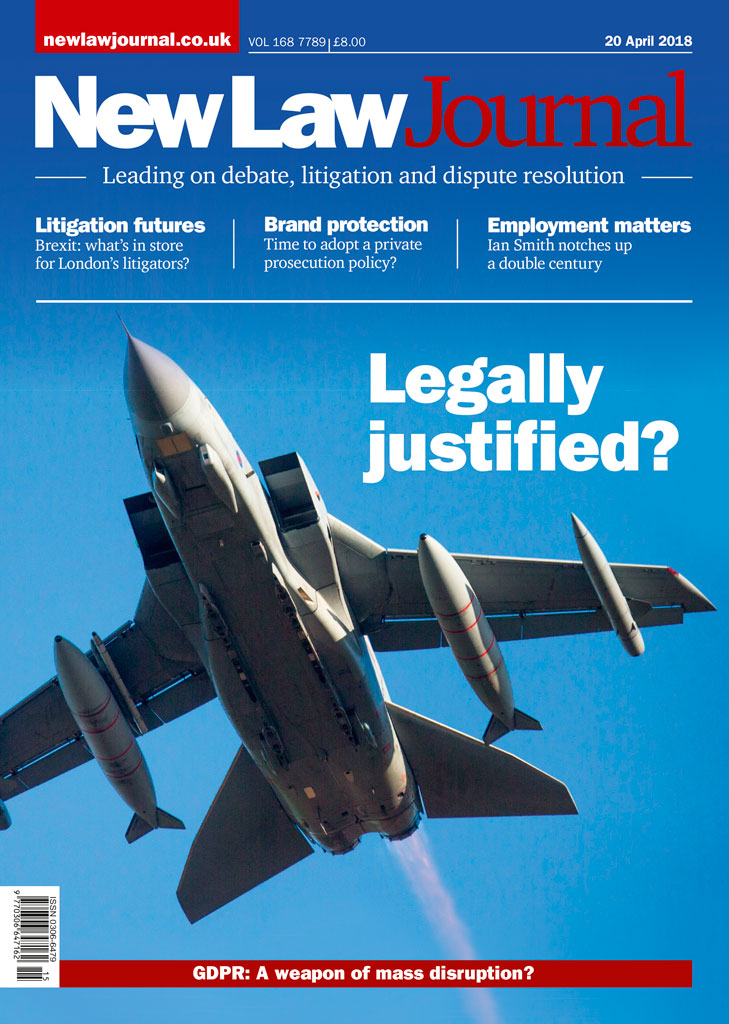
Geoffrey Bindman searches for a legal justification for the recent attack by the US, Britain & France on Syria
George Hepburne Scott considers how changes to the judiciary in Poland could affect Britain’s post-Brexit extradition relationship with the EU
Uncertainty remains regarding the impact of Brexit on London’s legal community, as Julian Acratopulo explains
Private prosecutions are taking off as a useful way to protect your brand & products, as Matt Bosworth explains
Patrick Wheeler & Mette Marie Sutton explain how increased data subject access rights could wreak havoc
Ian Smith celebrates an anniversary & is proof that quality never goes out of fashion
Cumulative effect of insurer’s tactic could run to many millions of pounds

MOVERS & SHAKERS


NLJ Career Profile: Hugo Plowman, Mishcon de Reya
From global fraud cases to fishing off-grid, Mishcon de Reya’s chair of dispute resolution Hugo Plowman discusses mentors, management switching off

Maguire Family Law—Jennifer Hudec, Ciara Florey, Alice Ferguson & Ruth Wynn
Maguire Family Law announces partner promotion and new hires amid a record year for enquiries

Switalskis—Rebecca Parry & Hannah Gamble
Switalskis wills and probate team extends reach with two appointments

