

THIS ISSUE
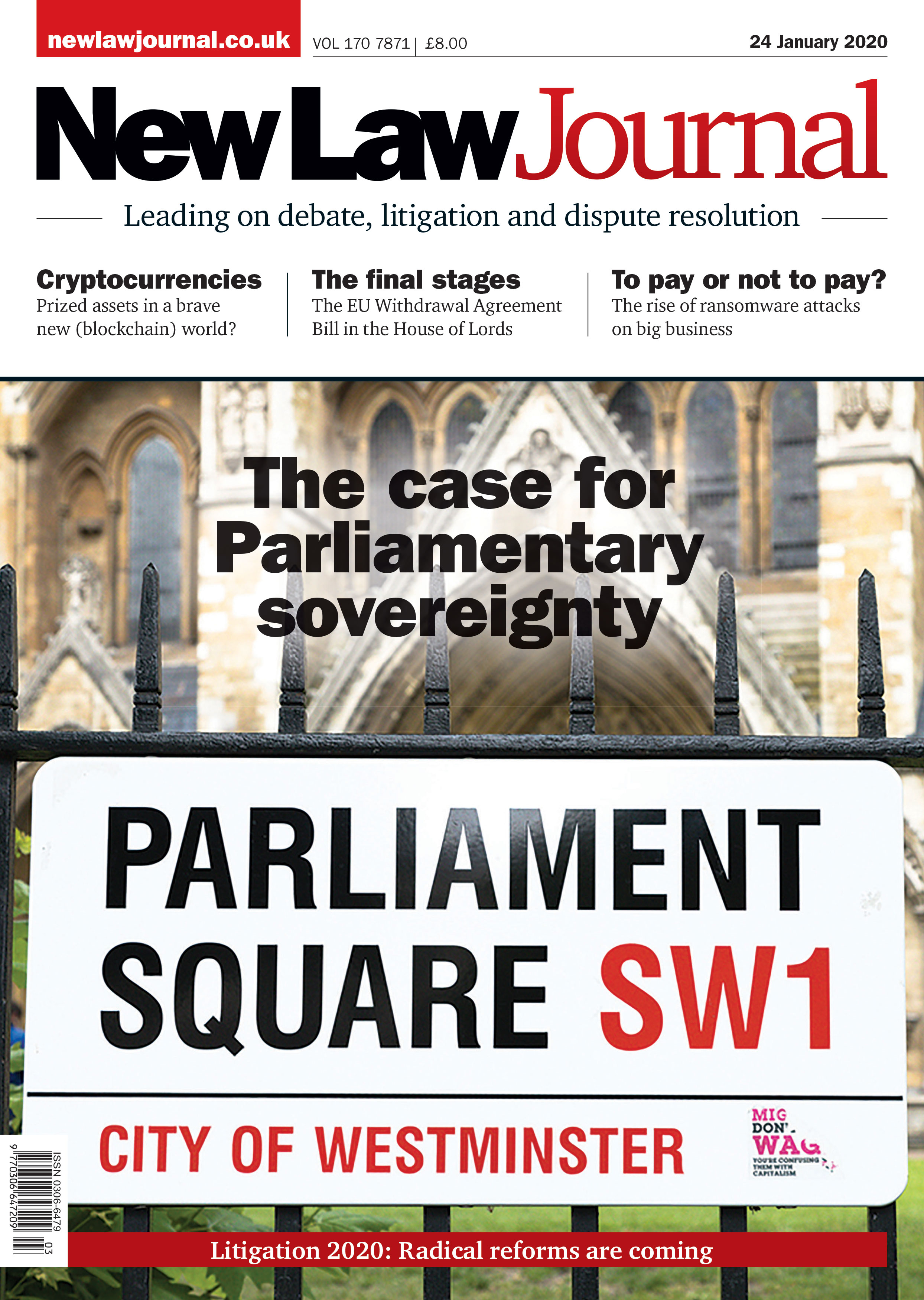


Cryptocurrencies under common law: are we there yet, asks Valya Georgieva
Michael Zander on the final stages
The High Court has upheld a widow’s right to bring a claim against her husband’s estate more than 26 years after grant of probate
Lawyers gave a mixed reaction to news that cameras will be allowed in the Crown Court as early as April or May this year
It's time to cast your vote for Legal Personality of the Year at this year’s LexisNexis Legal Awards
John Cooper QC makes a case for open justice
Dr Ping-fat Sze comments on the Hong Kong court’s compromise on the criminalisation of protest & shares his concerns about the rule of law & the future of justice
Flavia Kenyon outlines the increasing threat of ransomware cyber attacks on big business
Policy v principle: Dr Michael Arnheim puts the case for codification
Radical reforms are coming but all will be well, says Dominic Regan

MOVERS & SHAKERS


NLJ Career Profile: Hugo Plowman, Mishcon de Reya
From global fraud cases to fishing off-grid, Mishcon de Reya’s chair of dispute resolution Hugo Plowman discusses mentors, management switching off

Maguire Family Law—Jennifer Hudec, Ciara Florey, Alice Ferguson & Ruth Wynn
Maguire Family Law announces partner promotion and new hires amid a record year for enquiries

Switalskis—Rebecca Parry & Hannah Gamble
Switalskis wills and probate team extends reach with two appointments
NEWS
Restrictions on workplace non-disclosure agreements could make settlements slower, more complex and more expensive when reforms expected in 2027 take effect
Private prosecutors face closer scrutiny under Crown Prosecution Service guidance designed to strengthen accountability and consistency when intervention is requested
Foreign states cannot necessarily claim immunity for cyber operations launched abroad against computers in Britain, following a divided Supreme Court ruling
Defendants who make unsupported complaints about their lawyers risk losing legal aid while confiscation proceedings continue without representation
Lawyers advising Russian clients face different sanctions restrictions across the UK, EU and US, despite their shared objective of increasing pressure on Russia
Copyright © 2026 LexisNexis

