

THIS ISSUE


Corruption in the Metropolitan Police is not new and has not been fixed despite several high-profile cases over the years, professors Mike McConville and Luke Marsh write in this week’s NLJ
William Gibson explores the unlikely origins of the law of parliamentary privilege
Masood Ahmed provides guidance on taking evidence from non-parties in international arbitration
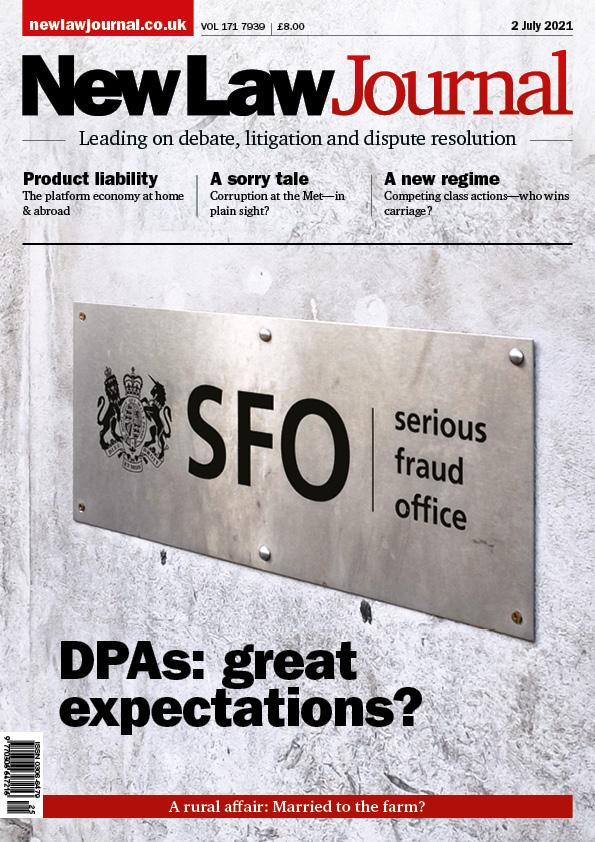
Ross Dixon charts the evolution of deferred prosecution agreements in the UK & assesses their credibility
Charlie Steele & Sarah Wrigley report on what to expect in the UK sanctions landscape post-Brexit
Michael Zander QC on a report by the parliamentary Joint Human Rights Committee
Hannah Porter explains why there can be so many complications for divorcing farming couples
Sarah Moore & Stuart Warmington discuss product liability & the platform economy at home & abroad
The Daniel Morgan scandal follows 150 years of corruption in the police & won’t be the last case of its kind, say Mike McConville & Luke Marsh

MOVERS & SHAKERS


NLJ Career Profile: Hugo Plowman, Mishcon de Reya
From global fraud cases to fishing off-grid, Mishcon de Reya’s chair of dispute resolution Hugo Plowman discusses mentors, management switching off

Maguire Family Law—Jennifer Hudec, Ciara Florey, Alice Ferguson & Ruth Wynn
Maguire Family Law announces partner promotion and new hires amid a record year for enquiries

Switalskis—Rebecca Parry & Hannah Gamble
Switalskis wills and probate team extends reach with two appointments
NEWS
Restrictions on workplace non-disclosure agreements could make settlements slower, more complex and more expensive when reforms expected in 2027 take effect
Private prosecutors face closer scrutiny under Crown Prosecution Service guidance designed to strengthen accountability and consistency when intervention is requested
Foreign states cannot necessarily claim immunity for cyber operations launched abroad against computers in Britain, following a divided Supreme Court ruling
Defendants who make unsupported complaints about their lawyers risk losing legal aid while confiscation proceedings continue without representation
Lawyers advising Russian clients face different sanctions restrictions across the UK, EU and US, despite their shared objective of increasing pressure on Russia
Copyright © 2026 LexisNexis

